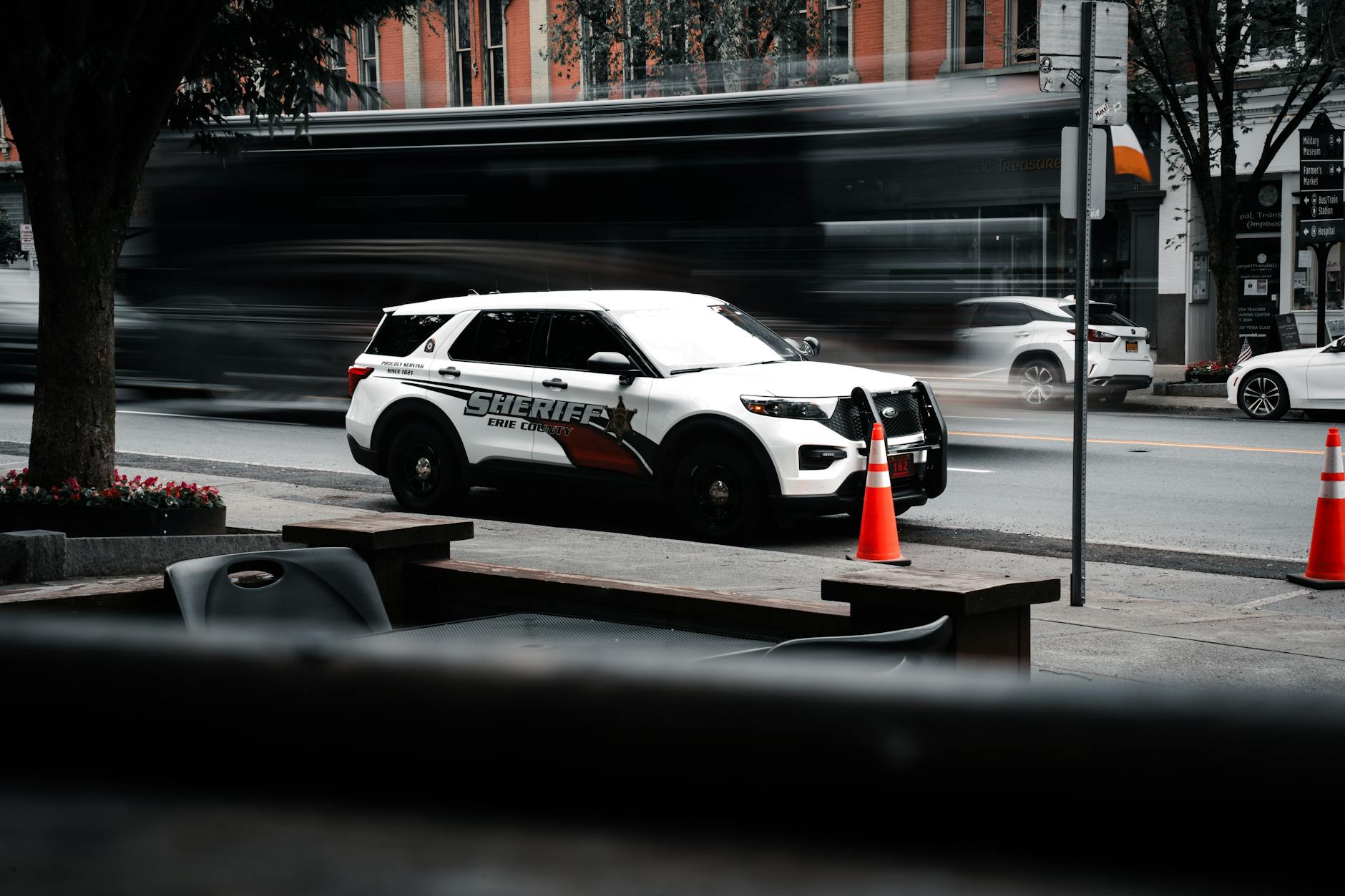
How police measure your speed matters more than most drivers realize. The method an officer uses can affect whether your ticket holds up in court. There are three main ways law enforcement clocks your speed: radar, lidar (laser), and pacing. Each one works differently and has different weaknesses. Understanding how police measure your speed gives you a real advantage if you ever need to fight a ticket.
How Police Measure Your Speed: Radar, Lidar, and Pacing Explained
Radar stands for Radio Detection and Ranging. A radar gun sends out radio waves that bounce off your car. The gun reads the change in wave frequency — called the Doppler effect — to calculate your speed. Officers can use radar while parked or while driving. However, radar beams are wide. They can pick up the wrong vehicle in heavy traffic. Radar guns have a margin of error of about 1–2 mph.
Lidar stands for Light Detection and Ranging. It fires a narrow infrared laser beam at your vehicle. The gun measures how far your car travels between pulses and calculates your speed from that. Lidar is more precise than radar because its beam is very narrow. It can single out one car in a group. However, lidar can only be used from a stationary position. Weather like rain, fog, or dust can affect its readings.
Pacing is the simplest method. An officer follows your car and matches your speed. They then check their own calibrated speedometer. For pacing to hold up, the officer typically needs to maintain a consistent following distance for a set stretch of road. In most cases, that means at least one-eighth to one-quarter of a mile. Pacing is common on highways where radar or lidar may not be practical.
| Method | How It Works | Accuracy | Can Be Used While Moving? | Common Weakness |
|---|---|---|---|---|
| Radar | Radio waves (Doppler effect) | ±1–2 mph | Yes | Wide beam — may tag wrong car |
| Lidar (Laser) | Infrared laser pulses | ±1 mph | No (stationary only) | Weather, dirty lens, aim errors |
| Pacing | Officer matches your speed | Depends on officer technique | Yes (officer must follow you) | Inconsistent distance, human error |
Why How Police Measure Your Speed Matters for Your Wallet
The method used to clock you affects your fine, your points, and your insurance rate. A speeding ticket caught by a properly calibrated lidar gun is harder to challenge than one based on pacing alone. That is why understanding how police measure your speed can save you real money. Fines vary widely by state — here are some concrete examples.
| State | 10 mph Over Limit | 15–19 mph Over | 25+ mph Over | License Points |
|---|---|---|---|---|
| California | $274 (with fees) | $438 (with fees) | $567 (with fees) | 1 point (2 for 100+ mph) |
| Florida | $204 | $254 | $279 | 3 points (4 for 15+ over) |
| New York | $45–$150 | $90–$300 | $180–$600 | 3–11 points |
| Texas | $223+ | Varies by county | $300+ | 2 points |
| Illinois | $120+ | $140+ | Up to $2,500 (40+ over) | Varies (possible suspension) |
Check your own state’s fine schedule for exact amounts. Beyond the ticket itself, your insurance rate typically goes up 20–30% after a speeding conviction. As a result, a $274 ticket can cost you over $1,000 in higher premiums over three years. That is the real cost of how police measure your speed — and whether you challenge it.
What This Means for You
If you get a speeding ticket, the first thing to check is which method was used. Your ticket or the officer’s notes should say whether it was radar, lidar, or pacing. This is important because each method has specific rules the officer must follow. For example, radar and lidar guns must be calibrated on a regular schedule. If the device was not properly calibrated, the reading may not hold up in court.
NHTSA sets performance standards for speed-measuring devices. States add their own calibration rules on top of that. In California, for example, a radar or lidar gun must have been calibrated within three years of the ticket date by a certified facility. Ask for the calibration records. If the agency cannot produce them, that weakens the case against you. Many drivers can get tickets reduced or dismissed this way.
You may also be able to challenge pacing tickets. Ask whether the officer maintained a consistent distance. Ask how far they followed you. If the officer cannot confirm these details, you may have grounds to contest the ticket. Understanding how police measure your speed is the foundation of any defense.
Common Mistakes to Avoid
The biggest mistake is assuming you cannot fight a ticket just because it was measured by radar or lidar. These devices are accurate, but they are not perfect. Dirty lenses, poor aim, and skipped calibrations all happen. However, you need to ask the right questions. Simply saying “the radar was wrong” without evidence will not work in court.
Another common mistake is ignoring the ticket. In most cases, an unpaid speeding ticket leads to late fees, a license suspension, or even a warrant. Typically, you have 15–30 days to respond. Even if you plan to pay, look into traffic school first. Many states let you take a course to keep the points off your record. That alone can save you hundreds in insurance costs.
Do not assume that how police measure your speed does not matter for your case. Some drivers pay the fine without ever checking the method, calibration records, or officer notes. That is money left on the table. For example, if the officer used lidar in heavy rain or aimed the gun through a dirty windshield, the reading could be off. You will never know unless you ask.
📨 Get Free Traffic Ticket Guides Alerts
Free · No spam · Unsubscribe anytime
Frequently Asked Questions
Which method is most accurate — radar, lidar, or pacing?
Lidar is generally the most accurate, with a margin of error around ±1 mph. Radar is close at ±1–2 mph. Pacing depends entirely on the officer’s technique and is the easiest to challenge. However, all three methods can produce errors under the wrong conditions.
Can I fight a speeding ticket based on how police measure your speed?
Yes. You may be able to challenge the calibration records, the officer’s training certification, or the conditions during the reading. For example, radar can tag the wrong car in heavy traffic, and lidar can give bad readings in fog or rain. Many drivers successfully get tickets reduced by questioning the method used.
Do police have to tell me which device they used?
The method is typically noted on your ticket or in the officer’s report. If it is not, you can request the details through a court discovery process before your hearing. Knowing how police measure your speed is essential information for building any defense, and you have a right to that information.
A ticket can raise your insurance for years
See how much a violation affects rates in your state — and compare cheaper options.
Find Your State’s Exact Rules
Fines, points, and the process to fight a ticket all change from state to state. Pick your state to see the exact fine by how fast you were going, the points it adds, and your options to fight it or take traffic school.
Sources & How to Verify
The figures and rules on this page are drawn from official sources. Always confirm the exact amount and procedure with your state DMV or the court listed on your citation.
- NHTSA: nhtsa.gov — national speeding and speed-management data
- GHSA: ghsa.org — state traffic-law summaries and automated-enforcement data
- IIHS: iihs.org — insurance and crash-risk research
- Cornell LII: law.cornell.edu/wex — plain-English legal definitions
- Your state DMV & court: search “[your state] DMV points” and the court named on your ticket for the exact fine schedule
Content last reviewed June 2026. If you notice outdated information, please contact us.
Related Guides
- All 50 State Guides
- More in This Category
- Traffic Law Explainers
- Violation Type Guides
- Cost & Insurance Impact
- Comparisons
- Traffic School & Dismissal
Informational only. Speeding Ticket Guide is an independent educational resource, not a law firm, and this page does not provide legal advice. Fines, points, and rules are estimates for general guidance and can change — always verify the exact amount and procedure with your state DMV or the court listed on your citation. For advice about your specific situation, consult a licensed traffic attorney in your state.