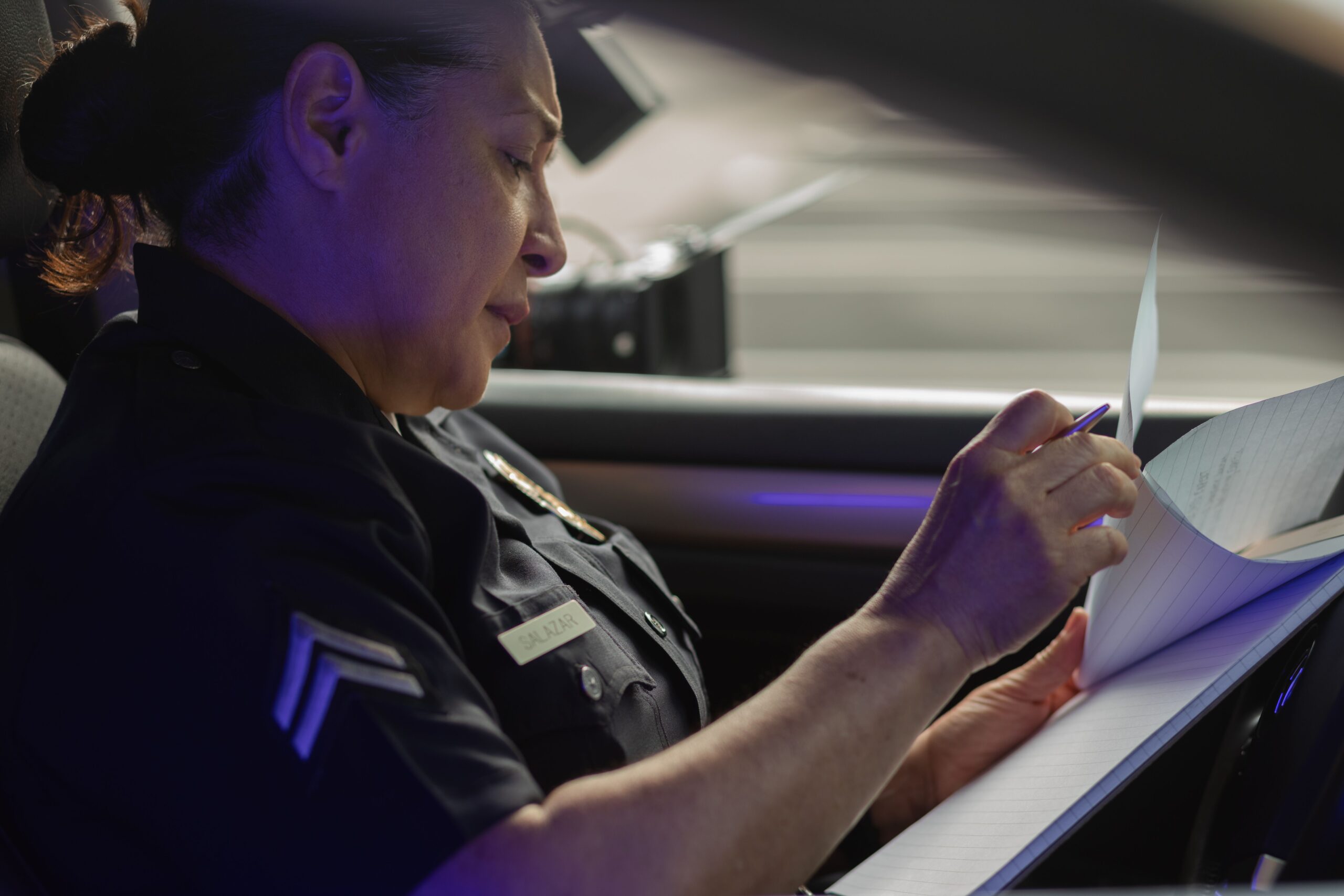
Fight speeding ticket charges before you just pay it. Paying the fine is the same as pleading guilty, which means points on your license, higher insurance for years, and a conviction on your driving record. In most states you have the right to contest the ticket, and the process is often simpler than people expect. This guide explains how to fight speeding ticket charges, what defenses actually work, and links you to a step-by-step guide for your state.
Quick Facts: Fighting a Speeding Ticket
- Paying the fine is a guilty plea in every state. It adds points and a conviction to your record.
- Many states let you fight speeding ticket charges by mail (trial by written declaration) so you never enter a courtroom.
- If you fight and lose, you generally just pay the original fine. Some states let you request a new in-person trial after a mail loss.
- The most common defenses involve radar or laser calibration, officer positioning, signage problems, and pacing errors.
- Hiring a traffic attorney is worth considering for high-speed citations, commercial drivers, or repeat offenses.
- Even if you do not get a full dismissal, traffic school can keep points off your record in many states.
Why You Should Fight a Speeding Ticket
The fine itself is usually the smallest cost. The real damage comes from the points added to your license and the insurance increase that follows. A single speeding ticket can raise your premium for three to five years, and multiple tickets can push you into high-risk status. Fighting the ticket gives you a chance to avoid all of that. Even if the dismissal rate in your state is modest, the financial math almost always favors contesting.
How to Fight a Speeding Ticket: Your Options
Every state gives you at least two paths, and most offer more. Here are the main ways to fight a speeding ticket, from least to most involved.
| Option | How it works | Best for |
|---|---|---|
| Trial by written declaration | You submit your defense in writing. The officer must respond in writing too. A judge decides without a hearing. | Low-speed tickets, simple defenses, anyone who cannot take time off |
| In-person court trial | You appear before a judge, present your defense, and cross-examine the officer. The officer must show up or the ticket is typically dismissed. | Stronger defenses, situations where the officer may not appear |
| Hire a traffic attorney | A lawyer handles your case, often without you attending. They know local judges, prosecutors, and plea options. | High-speed tickets, commercial licenses, repeat offenses, reckless driving charges |
| Traffic school plea | You plead guilty but complete a driving course to keep points off your record. The conviction may still appear. | First-time offenders who want a quick resolution without points |
Not every option is available in every state. Your state guide below walks through exactly which paths are open to you and how the local process works.
Common Defenses That Work
No defense works 100 percent of the time, but these are the approaches that traffic attorneys and self-represented drivers use most often to fight speeding ticket cases successfully.
- Radar or laser calibration: Officers must calibrate speed-detection equipment regularly. If the calibration records are missing, outdated, or show errors, the speed reading can be challenged.
- Officer positioning and angle: Radar and laser readings can be affected by the angle of the device, distance, and traffic density. A wide radar beam can lock onto the wrong vehicle.
- Speed survey and signage: Some speed limits are set by engineering surveys that must be updated periodically. If the survey is expired or the signage is missing or obscured, the posted limit may not be legally enforceable.
- Pacing errors: When an officer estimates your speed by following you, errors in their own speedometer, distance, or driving pattern can weaken the evidence.
- Ticket errors: Mistakes on the citation itself, such as the wrong vehicle description, location, or code section, can be grounds for dismissal in some jurisdictions.
What Happens If You Fight and Lose
In most states, losing means you pay the original fine, the same amount you would have paid by pleading guilty. You generally do not face a higher penalty for contesting. Some states that offer trial by written declaration also let you request a brand-new in-person trial (a trial de novo) if the written decision goes against you, giving you a second chance at no extra cost. Your state guide covers the specific rules.
How a Conviction Affects Your Insurance
A speeding conviction stays on your driving record and signals risk to your insurer. Even a single ticket can raise your premium noticeably, and multiple convictions or a license suspension can move you into a high-risk pool. The insurance increase typically lasts three to five years, far longer than most people expect, and often costs more than the ticket fine itself.
Fight it or pay it — your insurance already noticed
A conviction can raise your premium for years. See how much your rate could change and compare better options.
Find Your State’s Guide to Fighting a Speeding Ticket
Every state has its own rules for contesting a ticket: different courts, different deadlines, different options. Pick your state below for a detailed guide covering the exact process, available defenses, traffic school eligibility, and what to expect in court.
Alaska
Arizona
Arkansas
California
Colorado
Connecticut
Delaware
Florida
Georgia
Hawaii
Idaho
Illinois
Indiana
Iowa
Kansas
Kentucky
Louisiana
Maine
Maryland
Massachusetts
Michigan
Minnesota
Mississippi
Missouri
Montana
Nebraska
Nevada
New Hampshire
New Jersey
New Mexico
New York
North Carolina
North Dakota
Ohio
Oklahoma
Oregon
Pennsylvania
Rhode Island
South Carolina
South Dakota
Tennessee
Texas
Utah
Vermont
Virginia
Washington
West Virginia
Wisconsin
Wyoming
Frequently Asked Questions
Is it worth fighting speeding ticket charges?
Almost always. The fine is the smallest part of the cost. Points, insurance increases, and the conviction record do far more damage over time. Even a modest chance of dismissal usually makes it worth contesting.
Can I fight speeding ticket charges without a lawyer?
Yes. Many drivers successfully fight speeding ticket cases on their own, especially through trial by written declaration. A lawyer is most valuable for high-speed citations, commercial licenses, or repeat offenses where the stakes are higher.
What happens if the officer does not show up?
In most states, if the citing officer does not appear at your in-person trial, the ticket is dismissed. This does not apply to written declarations, where the officer submits a written statement instead.
Will fighting the ticket delay the points?
Yes. Points are not added until a conviction. While the case is pending, your record stays clean. If the ticket is dismissed, no points are ever added.
Sources & How to Verify
The information here is drawn from public legal resources and official court procedures. Traffic laws and contest processes change by state and year, so always confirm the current rules with your local court or state DMV.
- Your local traffic court: search “[your county] traffic court” for filing deadlines, forms, and hearing schedules
- Your state DMV: for point values, suspension thresholds, and traffic school eligibility
- NHTSA: nhtsa.gov — national traffic safety data
- Cornell LII: law.cornell.edu/wex — plain-English legal definitions
Informational only. Speeding Ticket Guide is an independent educational resource, not a law firm, and this page does not provide legal advice. Contest procedures, defenses, and outcomes vary by state, county, and case — always verify the current rules with your local court. For advice about your specific ticket, consult a licensed traffic attorney in your state.