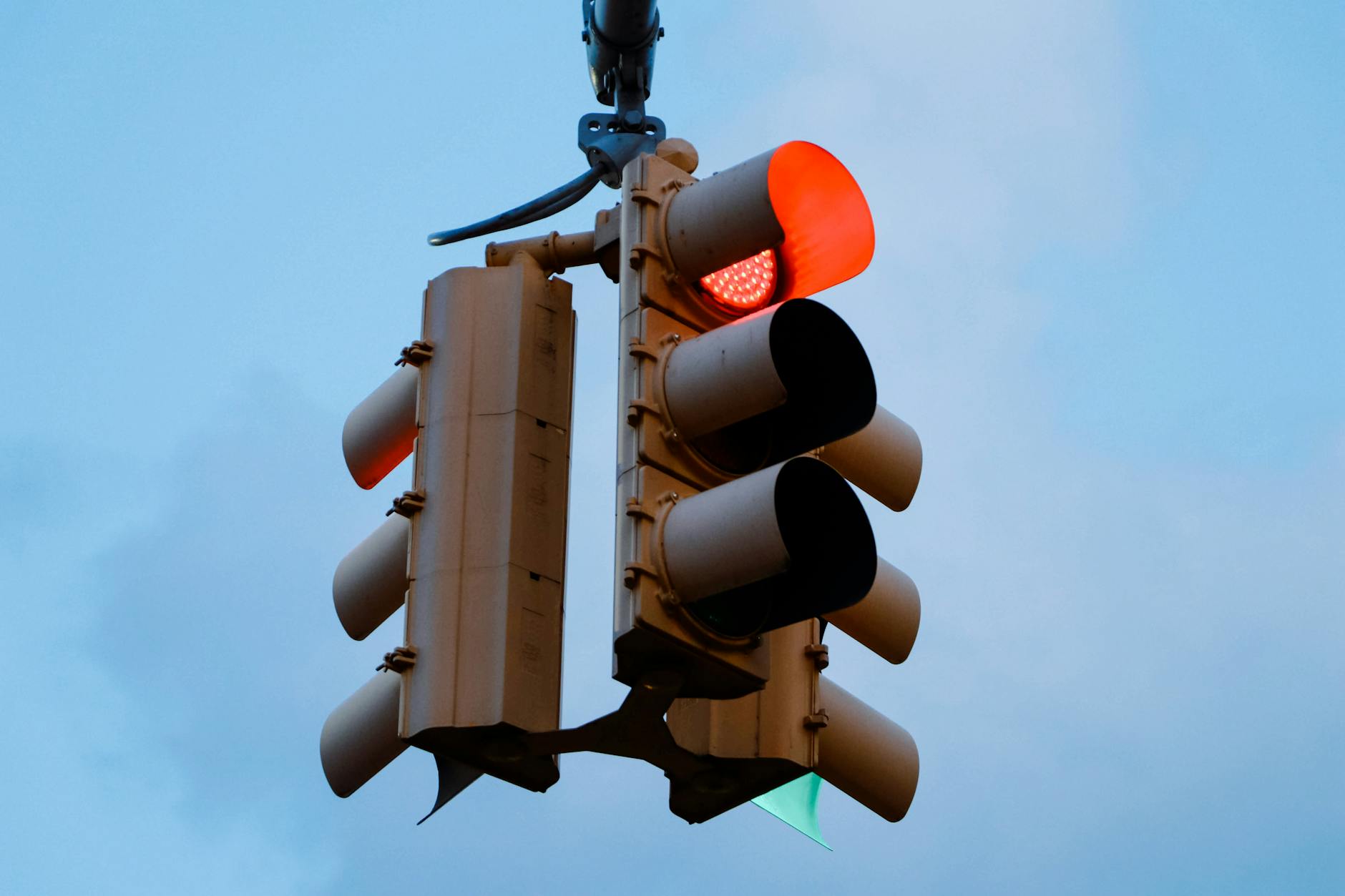
A red light ticket is one of the most common — and most expensive — traffic violations in the United States. You can get one if a police officer sees you enter an intersection after the signal turns red, or if a red light camera photographs your vehicle doing so. Either way, the penalties can be steep.
In most states, a red light ticket carries a fine ranging from $50 to over $500, possible points on your license, and a noticeable jump in your car insurance rates. The good news is that many drivers have options for fighting or reducing the charge.
What a Red Light Ticket Costs
The cost of a red light ticket varies widely by state. California has some of the highest totals because the state stacks roughly a dozen penalty assessments on top of a $100 base fine. Florida keeps its camera ticket fines lower, but the cost jumps sharply if you ignore the notice. Texas banned red light cameras entirely in 2019, so all tickets there come from an officer.
| State | Camera Ticket | Officer-Issued (Total w/ Fees) | Points (Officer-Issued) |
|---|---|---|---|
| California | $490–$550 | $490–$600 | 1 point |
| New York (NYC) | $50 | $230–$535 | 3 points |
| Florida | $158 | $277+ | 4 points |
| Texas | Cameras banned | $150–$269 | 2 points |
| Ohio | $95–$100 | $200–$300 | 2 points |
These figures include surcharges and court costs that most states add on top of the base fine. For example, California’s $100 base fine reaches nearly $500 after all the assessments. Check your own state’s guide on this site for the exact number in your area.
Does a Red Light Ticket Add Points to Your License?
In most cases, yes — if a police officer issues the ticket. An officer-issued red light ticket is a moving violation, and it will add points to your driving record. The exact number depends on your state. New York adds 3 points, Florida adds 4, and Texas adds 2.
However, red light camera tickets are different. In virtually every state that uses cameras, a camera ticket is treated as a civil penalty, not a moving violation. As a result, it typically adds zero points to your license. California made this official with SB 720, which took effect in October 2025 and classifies all camera tickets as civil violations with no DMV points.
Points matter because they add up. If you accumulate too many in a short period, your state can suspend your license. For example, New York charges a $300 Driver Responsibility Assessment fee if you rack up 6 or more points within 18 months. A single red light ticket gets you halfway there.
How a Red Light Ticket Affects Your Insurance
An officer-issued red light ticket can raise your car insurance premiums by about 23% on average, according to recent rate analyses. That translates to roughly $43 more per month for the typical driver. The increase usually lasts three to five years before dropping off your record.
The impact varies by state and by insurer. In North Carolina, for example, a red light violation can push rates up by as much as 40%. In New York, the average increase is closer to 6%. Your prior driving record matters too — a clean record with one red light ticket hurts less than a record that already has violations on it.
Here’s an important distinction: most red light camera tickets do not affect your insurance at all. Since camera tickets carry zero points in nearly every state, they typically are not reported to insurance companies. Only officer-issued tickets — which go on your driving record as moving violations — will trigger a rate increase. This is one reason many drivers choose to simply pay a camera ticket rather than fight it.
Can You Fight a Red Light Ticket?
Yes, and many drivers do so successfully. You are not guaranteed a dismissal, but several common defenses have a strong track record in traffic court. The key is gathering evidence before your hearing date.
For officer-issued tickets, the most common defenses include challenging the officer’s vantage point. The officer must have had a clear, unobstructed view of your vehicle entering the intersection. If they were positioned far away or behind other cars, that observation is questionable. Another strong defense is yellow light timing.
If you entered the intersection while the light was still yellow, you did not run a red. Short yellow cycles — under three seconds — are a documented problem at some intersections, and you may be able to return to the intersection and time it yourself as evidence.
📨 Get Free Traffic Ticket Guides Alerts
Free · No spam · Unsubscribe anytime
For camera tickets, you may be able to challenge the image quality, request the camera’s calibration and maintenance records, or point out errors on the citation itself such as a wrong plate number or incorrect date. In California, you can contest a camera ticket entirely by mail using a Trial by Written Declaration (form TR-205), and many of these are dismissed. In Florida, if someone else was driving your car when the camera photo was taken, you can submit an affidavit identifying the actual driver to have the ticket transferred.
Frequently Asked Questions
What happens if I ignore a red light ticket?
Ignoring a red light ticket almost always makes things worse. In most states, your fine will increase — sometimes doubling — and a bench warrant may be issued for your arrest. In Florida, an unpaid $158 camera ticket escalates to a $277+ Uniform Traffic Citation with 4 points on your license. Always respond by the deadline on your citation.
Do red light cameras always add points to my license?
No. In nearly every state, a red light camera ticket is a civil penalty that carries zero points. Only officer-issued red light tickets add points to your driving record. However, if you ignore a camera ticket and it escalates to a court citation, points may then apply.
Is it worth hiring a lawyer to fight a red light ticket?
It depends on the stakes. If you are facing a high fine, multiple points, or already have points on your record, a traffic attorney may be able to get the charge reduced or dismissed. Many offer free consultations. For a simple camera ticket with no points and a low fine, fighting it on your own or paying it is often the more practical choice.
A ticket can raise your insurance for years
See how much a violation affects rates in your state — and compare cheaper options.
Find Your State’s Exact Rules
Fines, points, and the process to fight a ticket all change from state to state. Pick your state to see the exact fine by how fast you were going, the points it adds, and your options to fight it or take traffic school.
Sources & How to Verify
The figures and rules on this page are drawn from official sources. Always confirm the exact amount and procedure with your state DMV or the court listed on your citation.
- NHTSA: nhtsa.gov — national speeding and speed-management data
- GHSA: ghsa.org — state traffic-law summaries and automated-enforcement data
- IIHS: iihs.org — insurance and crash-risk research
- Cornell LII: law.cornell.edu/wex — plain-English legal definitions
- Your state DMV & court: search “[your state] DMV points” and the court named on your ticket for the exact fine schedule
Content last reviewed June 2026. If you notice outdated information, please contact us.
Related Guides
- All 50 State Guides
- More in This Category
- Traffic Law Explainers
- Violation Type Guides
- Cost & Insurance Impact
- Comparisons
- Traffic School & Dismissal
You May Also Like
Informational only. Speeding Ticket Guide is an independent educational resource, not a law firm, and this page does not provide legal advice. Fines, points, and rules are estimates for general guidance and can change — always verify the exact amount and procedure with your state DMV or the court listed on your citation. For advice about your specific situation, consult a licensed traffic attorney in your state.