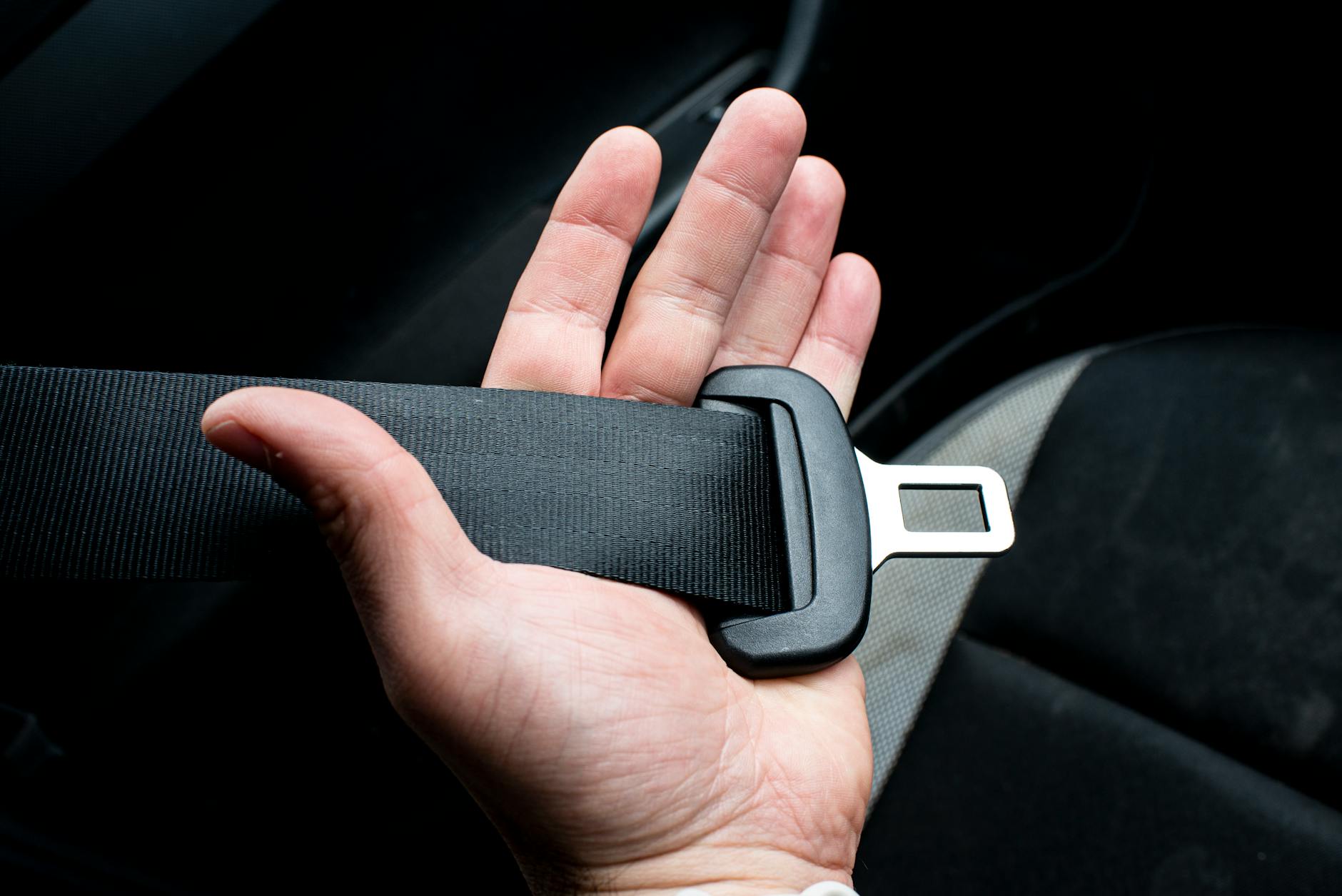
A seatbelt ticket is one of the most common traffic citations in the United States. You get one when a police officer spots you or a passenger riding without a fastened seatbelt. In most states, this is a primary offense. That means an officer can pull you over just for the seatbelt violation alone. Fines range from as low as $15 to over $160 depending on your state. However, the good news is that a seatbelt ticket usually does not add points to your license.
What a Seatbelt Ticket Costs
The fine for a seatbelt ticket varies widely by state. Some states set the base fine low but pile on court fees and surcharges. For example, California’s base fine is only $20 for a first offense. However, after mandatory penalty assessments, the total comes to roughly $162. Other states like Washington charge a flat $124 with no additional surcharges.
Here are exact fine amounts for five common states:
| State | Base Fine (Adult, 1st Offense) | Typical Total With Fees | Points on License |
|---|---|---|---|
| California | $20 | $162 | 0 |
| New York | $50 | $193 | 0 |
| Texas | $25–$50 | Up to $200 with court costs | 0 |
| Florida | $30 | $116 | 0 |
| Georgia | $15 | $15 | 0 |
Georgia has the lowest seatbelt fine in the country at just $15. Washington state charges one of the highest flat fines at $124. In most cases, your total cost depends on court fees, surcharges, and whether this is your first offense. Check your own state’s traffic fine schedule for the exact number.
Does a Seatbelt Ticket Add Points to Your License?
In most states, a seatbelt ticket does not add any points to your driving record. That is because it is classified as a non-moving violation. States like California, Texas, Florida, Ohio, and New Jersey all treat adult seatbelt violations as zero-point offenses. This is a key difference from speeding or running a red light.
However, there is one important exception. Child restraint violations are treated more seriously. In New York, if a passenger under 16 is unrestrained, the driver gets 3 points on their license. California adds 1 point for child seat violations. North Carolina also adds points when a minor is not buckled up. As a result, the stakes are much higher when children are involved.
Even without points, a seatbelt ticket still goes on your record as a citation. Multiple seatbelt violations can create a pattern that judges and prosecutors notice. For example, New Jersey increases fines from $46 for a first offense to $140 for a third. Typically, keeping a clean record is the best way to avoid escalating penalties.
How a Seatbelt Ticket Affects Your Insurance
A single seatbelt ticket is unlikely to cause a noticeable jump in your insurance premiums. Because most states classify it as a non-moving violation, many insurers do not penalize it at all. This is very different from a speeding ticket, which can raise your rates by 20% or more.
In the few states that treat seatbelt violations as moving violations, you may see a small increase. Industry data suggests the average rate bump is around 3% at most. However, this depends on your insurer and your overall driving history. A driver with a clean record will likely see little to no impact from one seatbelt ticket.
That said, multiple seatbelt violations combined with other infractions can add up. Insurance companies look at your full driving profile when setting rates. If you have several tickets of any kind within a short period, your premiums may go up. In most cases, a single seatbelt ticket on an otherwise clean record is not something to lose sleep over.
Can You Fight a Seatbelt Ticket?
Yes, many drivers can successfully contest a seatbelt ticket. Since the fine is relatively small, some people just pay it and move on. However, if you believe you were wearing your seatbelt, it may be worth showing up to court. Seatbelt violations often come down to the officer’s observation versus your word.
Common defenses include arguing that you were actually buckled up and the officer’s view was obstructed. For example, a dark-colored seatbelt against dark clothing can be hard to see from outside the vehicle. Dashcam footage or a passenger who can testify on your behalf may help your case. In secondary enforcement states like Ohio and Virginia, you may also challenge whether the officer had a valid primary reason for the traffic stop in the first place.
Some courts allow you to take a defensive driving course in exchange for dismissing a seatbelt ticket. Medical exemptions also exist in most states if a doctor certifies that wearing a seatbelt is not safe for your specific condition. Check with your local court about options before your hearing date.
📨 Get Free Traffic Ticket Guides Alerts
Free · No spam · Unsubscribe anytime
Frequently Asked Questions
Can I get a seatbelt ticket as a passenger?
It depends on the state. In some states, only the driver is responsible for all occupants. In others, adult passengers can receive their own seatbelt ticket. Typically, the driver is always cited when a minor passenger is unbuckled, regardless of state law.
Is there any state where adults do not need to wear a seatbelt?
New Hampshire is the only state with no adult seatbelt law. Adults 18 and older are not required to buckle up there. However, minors under 18 must still wear a seatbelt in New Hampshire. Every other state requires all occupants to be restrained.
Does a seatbelt ticket show up on a background check?
A seatbelt ticket is a civil infraction in most states, not a criminal offense. It will appear on your driving record but typically does not show up on a standard criminal background check. However, if you fail to pay the fine and a warrant is issued, that could create a criminal record.
A ticket can raise your insurance for years
See how much a violation affects rates in your state — and compare cheaper options.
Find Your State’s Exact Rules
Fines, points, and the process to fight a ticket all change from state to state. Pick your state to see the exact fine by how fast you were going, the points it adds, and your options to fight it or take traffic school.
Sources & How to Verify
The figures and rules on this page are drawn from official sources. Always confirm the exact amount and procedure with your state DMV or the court listed on your citation.
- NHTSA: nhtsa.gov — national speeding and speed-management data
- GHSA: ghsa.org — state traffic-law summaries and automated-enforcement data
- IIHS: iihs.org — insurance and crash-risk research
- Cornell LII: law.cornell.edu/wex — plain-English legal definitions
- Your state DMV & court: search “[your state] DMV points” and the court named on your ticket for the exact fine schedule
Content last reviewed June 2026. If you notice outdated information, please contact us.
Related Guides
- All 50 State Guides
- More in This Category
- Traffic Law Explainers
- Violation Type Guides
- Cost & Insurance Impact
- Comparisons
- Traffic School & Dismissal
Informational only. Speeding Ticket Guide is an independent educational resource, not a law firm, and this page does not provide legal advice. Fines, points, and rules are estimates for general guidance and can change — always verify the exact amount and procedure with your state DMV or the court listed on your citation. For advice about your specific situation, consult a licensed traffic attorney in your state.