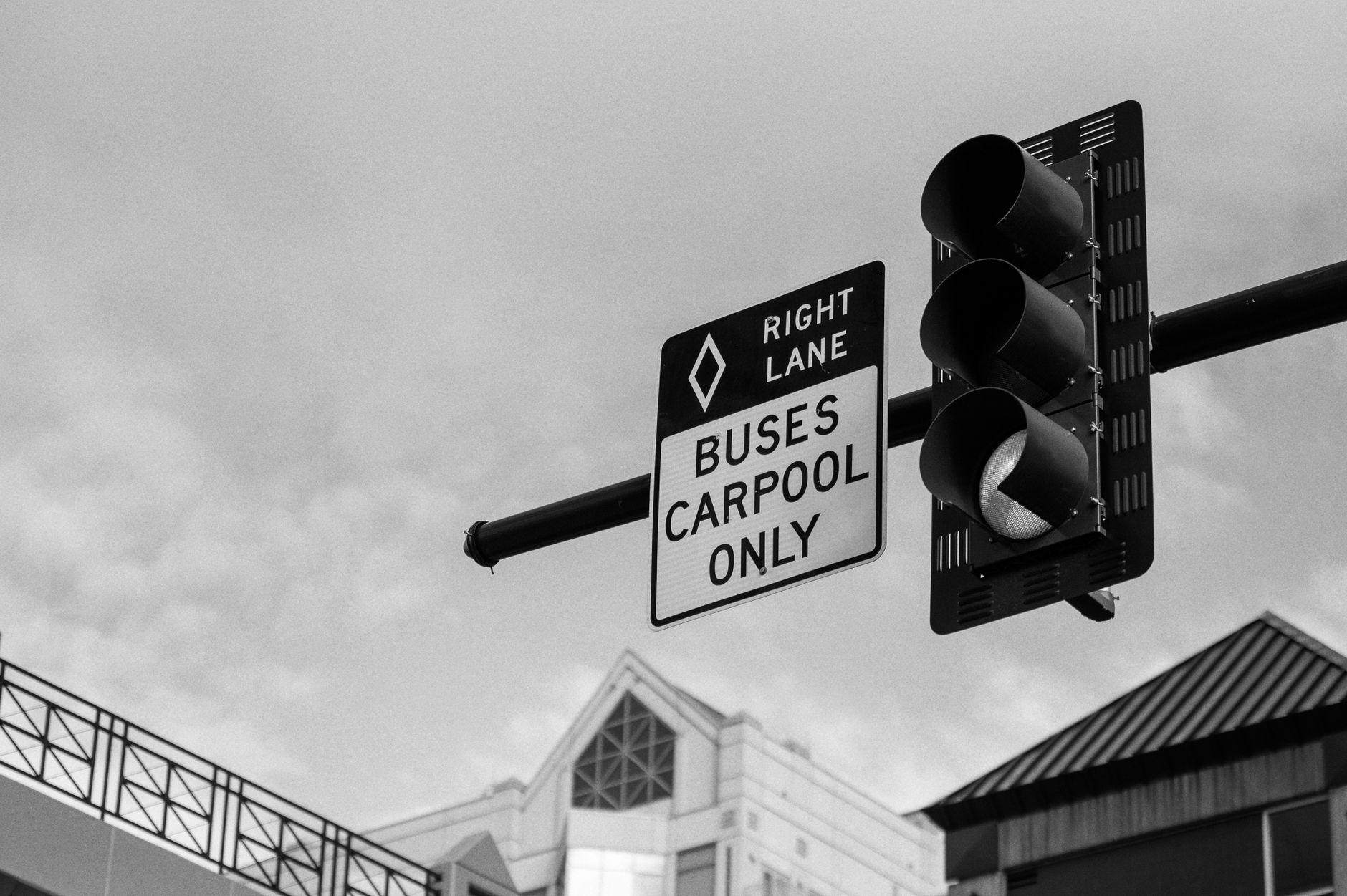
An hov lane ticket is what you get when you drive in a high-occupancy vehicle lane without enough passengers. These lanes are reserved for carpools, vanpools, and sometimes motorcycles or clean-air vehicles. Police watch these lanes closely. If you are the only person in your car and you cruise through the carpool lane, you can expect a citation. In most cases, the fine is much steeper than a regular traffic ticket. The good news is that an hov lane ticket is often beatable if you know how the process works.
What an HOV Lane Ticket Costs
The price of an hov lane ticket varies widely by state. Some states set a low base fine but pile on court fees that triple the total. Others start high and escalate for repeat offenses. For example, California’s base fine is just $100, but after county surcharges and penalty assessments, your first offense totals around $490. A second California offense within 12 months jumps to roughly $710.
| State | First-Offense Fine (Total w/ Fees) | Points |
|---|---|---|
| California | ~$490 | 0 |
| New York | ~$243 | 2 |
| Virginia | $100 | 0 |
| Washington | $186 | No points system |
| Arizona | $400 | 0 |
Virginia ramps up fast for repeat offenders. A second HOV offense within five years costs $250. A third costs $500, and a fourth hits $1,000. Arizona posts signs on Valley freeways warning of a $400 minimum fine. Check your own state’s traffic-ticket guide for the exact number where you were cited.
Does an HOV Lane Ticket Add Points to Your License?
This depends entirely on your state. In California, an hov lane ticket is classified as a non-moving violation. That means zero points on your DMV record. Arizona treats it as a civil penalty rather than a criminal traffic offense, so no points there either. Texas abolished its points system entirely in 2019.
However, New York adds 2 points for an HOV violation cited under VTL 1110(a). Accumulating 10 or more points within 24 months in New York triggers a license suspension. Georgia takes a middle approach. Your first hov lane ticket carries no points, but a second or subsequent offense adds 1 point to your record.
As a result, the point impact of an hov lane ticket ranges from nothing to moderately serious depending on where you live. Even in no-point states, the conviction still appears on your driving record for several years.
How an HOV Lane Ticket Affects Your Insurance
Insurance companies care most about points. In states where an hov lane ticket adds points to your license, you can expect a rate increase of roughly 18% on average. That increase typically lasts up to three years. For example, a New York driver paying $2,000 a year could see an extra $360 annually after a 2-point HOV conviction.
In states where the violation carries zero points, many insurers will not raise your rates at all. California and Arizona drivers often dodge an insurance hit because the offense is classified as non-moving. However, this is not guaranteed. Some insurers review all convictions on your record regardless of point status.
In Washington, there is no points system, but insurers can still see the violation on your record for about three years. Typically, shopping around for new quotes after an hov lane ticket is a smart move. Different carriers weigh these violations differently.
Can You Fight an HOV Lane Ticket?
Yes, and many drivers do win. The most common defense is the hidden passenger. If someone was in your car but the officer could not see them, you may be able to present evidence. For example, a child asleep in a rear-facing car seat is easy to miss from outside the vehicle. Bring a passenger declaration or a photo with a timestamp.
Another defense involves signage. If the HOV lane signs were missing, blocked, or confusing at the spot where you were cited, you can argue you had no clear notice. Take photos of the signage conditions as soon as possible after your citation. In California specifically, you can file a Trial by Written Declaration under CVC 40902. This lets you contest the hov lane ticket by mail without appearing in court. If you lose, you can still request an in-person trial with no additional penalty.
Other valid defenses include entering the lane to avoid an emergency, having a valid clean-air vehicle sticker that was obscured, or arguing the officer had an obstructed view of your vehicle’s interior. You may also be able to attend traffic school to keep the conviction off your record in some jurisdictions. Check with your local court for available options.
📨 Get Free Traffic Ticket Guides Alerts
Free · No spam · Unsubscribe anytime
Frequently Asked Questions
Do babies and children count as passengers for the HOV lane?
Yes. In every U.S. state with HOV lanes, any living person counts as an occupant regardless of age. A baby in a car seat qualifies you for the carpool lane. If you received an hov lane ticket while a child was in the car, this is a strong defense.
Can I use the HOV lane if I have a hybrid or electric vehicle?
It depends on your state and your vehicle’s sticker. California issues Clean Air Vehicle decals that allow solo drivers in HOV lanes. However, these stickers expire and must be renewed. Other states have similar programs. Check your state’s DMV website to see if your vehicle qualifies before assuming you can use the lane alone.
Will an hov lane ticket show up on a background check?
Typically, no. An HOV violation is an infraction, not a criminal offense. Standard background checks focus on criminal records and generally do not flag minor traffic infractions. However, the conviction will appear on your driving record, which employers may check if the job involves driving.
A ticket can raise your insurance for years
See how much a violation affects rates in your state — and compare cheaper options.
Find Your State’s Exact Rules
Fines, points, and the process to fight a ticket all change from state to state. Pick your state to see the exact fine by how fast you were going, the points it adds, and your options to fight it or take traffic school.
Sources & How to Verify
The figures and rules on this page are drawn from official sources. Always confirm the exact amount and procedure with your state DMV or the court listed on your citation.
- NHTSA: nhtsa.gov — national speeding and speed-management data
- GHSA: ghsa.org — state traffic-law summaries and automated-enforcement data
- IIHS: iihs.org — insurance and crash-risk research
- Cornell LII: law.cornell.edu/wex — plain-English legal definitions
- Your state DMV & court: search “[your state] DMV points” and the court named on your ticket for the exact fine schedule
Content last reviewed June 2026. If you notice outdated information, please contact us.
Related Guides
- All 50 State Guides
- More in This Category
- Traffic Law Explainers
- Violation Type Guides
- Cost & Insurance Impact
- Comparisons
- Traffic School & Dismissal
Informational only. Speeding Ticket Guide is an independent educational resource, not a law firm, and this page does not provide legal advice. Fines, points, and rules are estimates for general guidance and can change — always verify the exact amount and procedure with your state DMV or the court listed on your citation. For advice about your specific situation, consult a licensed traffic attorney in your state.