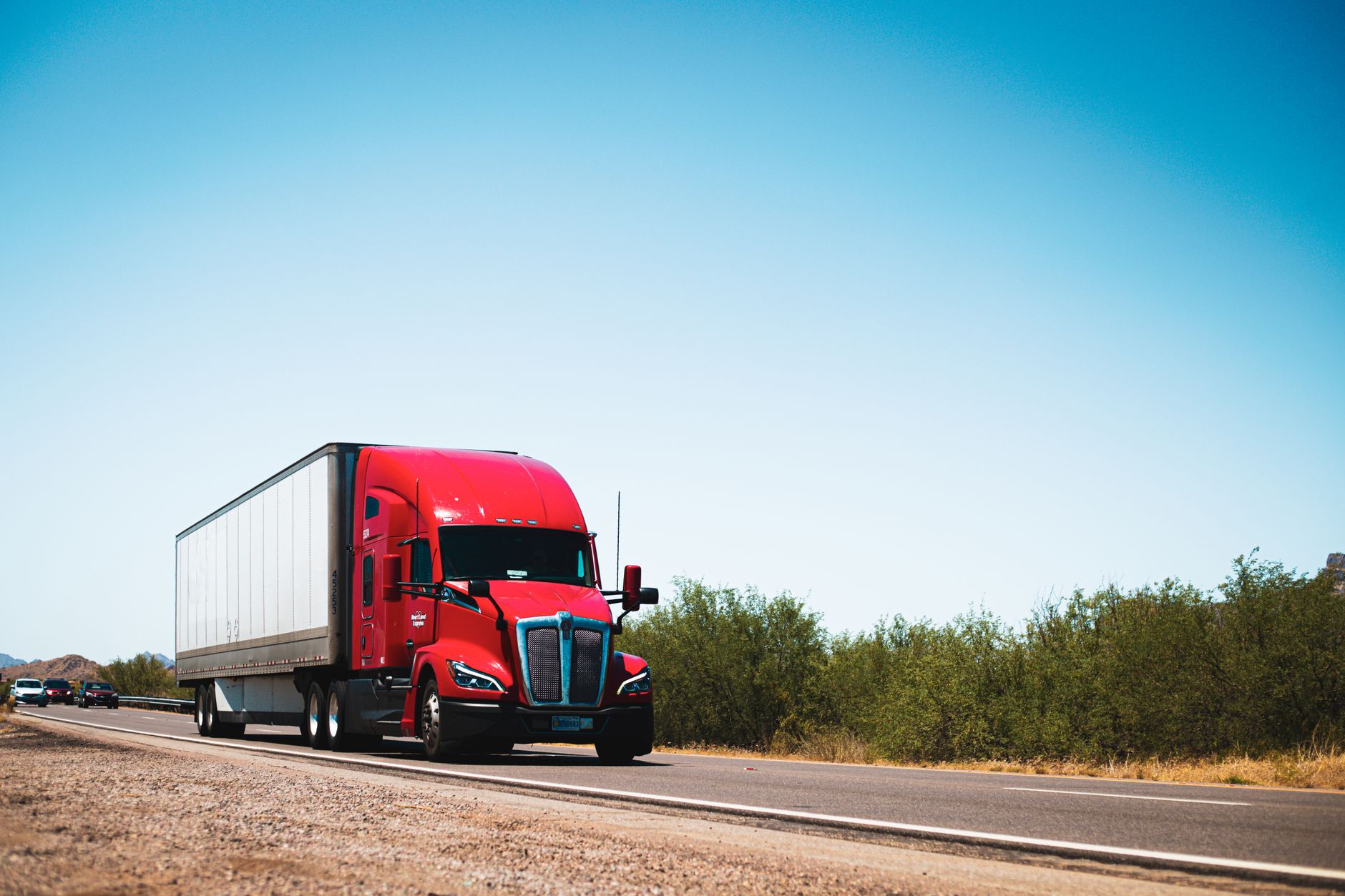
CDL speeding ticket consequences hit harder than most commercial drivers expect. A single ticket can trigger federal penalties, insurance hikes, and even job loss. Unlike regular drivers, CDL holders face a separate layer of rules under the Federal Motor Carrier Safety Administration (FMCSA). These federal rules apply whether you were driving your rig or your personal car. In 2026, the stakes are higher than ever. This guide breaks down everything you need to know to protect your CDL and your livelihood.
- Why a CDL Speeding Ticket Is Different From a Regular Ticket
- Federal “Serious Traffic Violation” Rules for CDL Holders
- CDL Speeding Ticket Disqualification Periods
- CDL Speeding Ticket Fines by State
- How CSA Points Work for CDL Speeding Violations
- Does It Matter If You Were in Your Personal Vehicle?
- Can CDL Holders Use Traffic School to Dismiss a Ticket?
- How a CDL Speeding Ticket Affects Your Insurance
- How to Fight a CDL Speeding Ticket
- 2026 Law Changes That Affect CDL Speeding Tickets
- What Happens to Your CDL After Multiple Speeding Tickets
- CDL Speeding Ticket vs. Regular Speeding Ticket: Side-by-Side
- Frequently Asked Questions About CDL Speeding Tickets
Why a CDL Speeding Ticket Is Different From a Regular Ticket
Regular drivers worry about fines and points. CDL holders have to worry about all of that plus federal consequences. The FMCSA sets rules that go above and beyond what your state requires. These federal rules can cost you your license even when state law would let you keep it.
Here is what makes a CDL speeding ticket unique. The FMCSA classifies speeding 15 mph or more over the limit as a “serious traffic violation” under 49 CFR 383.5. This classification triggers a whole chain of consequences. It doesn’t matter if you were hauling freight or driving to the grocery store. If you hold a CDL, both tickets count toward your federal violation total.
Regular drivers in many states can take a defensive driving course to dismiss a ticket. CDL holders almost never have that option. Federal law (49 CFR 384.226) prohibits states from masking or diverting CDL traffic violations. As a result, that ticket stays on your record. You can learn more about how points work in our Driving Points by State guide.
Federal “Serious Traffic Violation” Rules for CDL Holders
The FMCSA uses a specific list to define serious traffic violations. Speeding 15 mph or more over the posted limit is on that list. However, it is not the only violation that counts. Here is the full list of federal serious traffic violations:
- Excessive speeding — 15 mph or more over the posted limit
- Reckless driving
- Improper or erratic lane changes
- Following too closely
- Driving a CMV without a CDL
- Driving a CMV without the proper class or endorsements
The 15 mph threshold is absolute at the federal level. Going 15 over is treated the same as going 30 over for disqualification purposes. There is no graduated scale. A CDL speeding ticket at 16 mph over carries the same federal weight as one at 40 mph over. For a full explanation of traffic violation categories, visit our traffic law glossary.
CDL Speeding Ticket Disqualification Periods
A single CDL speeding ticket at 15 mph or more over the limit does not automatically suspend your CDL. However, it sets the clock ticking. If you pick up a second serious violation within three years, the FMCSA requires your state to disqualify your CDL.
| Serious Violations in 3-Year Window | Minimum CDL Disqualification | What This Means |
|---|---|---|
| 1 serious violation | No disqualification | Goes on your record; starts the 3-year clock |
| 2 serious violations within 3 years | 60 days | Mandatory CDL suspension — no driving CMVs for 60 days minimum |
| 3 serious violations within 3 years | 120 days | Mandatory CDL suspension — no driving CMVs for 120 days minimum |
| Major offense (DUI, hit-and-run, etc.) | 1 year (first offense) | One full year off the road |
| Major offense while hauling hazmat | 3 years (first offense) | Three full years off the road |
| 2 major offenses (any combination) | Lifetime | Permanent CDL revocation (some states allow reinstatement after 10 years with rehab) |
The three-year window is measured from conviction date to conviction date. For example, if you get a CDL speeding ticket for 20 mph over in January 2026 and another in December 2028, both fall within the window. That means a mandatory 60-day disqualification. These are federal minimums. Your state may impose even longer suspension periods.
CDL Speeding Ticket Fines by State
Fine amounts for a CDL speeding ticket vary widely by state and jurisdiction. CDL holders generally pay the same base fine as regular drivers. However, the total financial impact is far greater when you factor in lost income during any disqualification period. For a complete breakdown, check our Speeding Ticket Cost by State guide.
| State | 1–10 mph Over | 11–14 mph Over | 15–20 mph Over | 21–30 mph Over | 30+ mph Over | Special Notes |
|---|---|---|---|---|---|---|
| California | $238 | $238 | $367 | $367 | $490+ | Base fines are low but penalty assessments multiply total by 4–5x |
| Texas | $224–$234 | $259 | $284 | $309 | $334 | Varies by county; CDL holders cannot use defensive driving dismissal |
| Florida | $129–$204 | $204 | $254 | $279 | $354 | 50+ mph over is now a criminal misdemeanor (HB 351, effective Oct 2025) |
| New York | $150–$235 | $150–$235 | $175–$385 | $175–$385 | $265–$685 | Mandatory $85–$93 surcharge added to all speeding fines |
| Illinois | $120–$140 | $140–$200 | $250+ | Up to $1,500 | Up to $2,500 | Among the highest maximum fines in the nation |
| Virginia | ~$6/mph over | ~$6/mph over | ~$6/mph over | $250+ | Up to $2,500 + jail | 20+ over or 85+ mph = reckless driving (criminal misdemeanor) |
| Pennsylvania | $35 + $2/mph | $35 + $2/mph | $35 + $2/mph | $35 + $2/mph | $35 + $2/mph | $42.50 base if speed limit is 65+ mph |
| Ohio | $135 | Court-set | Court-set | Court-set | $200+ | Fines vary significantly by municipality |
These figures represent typical total costs including court fees and surcharges. In most cases, the fine itself is the smallest part of a CDL speeding ticket’s total cost. Lost wages during a disqualification period often exceed the fine by thousands of dollars. Check your state’s specific penalties in our state-by-state guide directory.
How CSA Points Work for CDL Speeding Violations
The FMCSA’s Compliance, Safety, Accountability (CSA) program tracks safety violations for carriers and drivers. Speeding violations fall under the Unsafe Driving BASIC category. Each violation gets a severity weight, and recent violations count more heavily.
| Violation | Severity Weight (1–10 Scale) | 0–6 Month Multiplier | 6–12 Month Multiplier | 12–24 Month Multiplier | Effective Points (If Recent) |
|---|---|---|---|---|---|
| Speeding 1–5 mph over | 1 | 3x | 2x | 1x | 3 points |
| Speeding 6–10 mph over | 4 | 3x | 2x | 1x | 12 points |
| Speeding 11–14 mph over | 7 | 3x | 2x | 1x | 21 points |
| Speeding 15+ mph over | 10 | 3x | 2x | 1x | 30 points |
| Speeding in work/construction zone | 10 | 3x | 2x | 1x | 30 points |
| Reckless driving | 10 | 3x | 2x | 1x | 30 points |
Here is a practical example. A CDL speeding ticket for 15+ mph over the limit carries a severity weight of 10. If the violation happened within the last six months, multiply by 3. That means 30 points hitting your carrier’s Unsafe Driving BASIC score. High CSA scores can trigger FMCSA interventions for the entire carrier, not just the individual driver. As a result, carriers take these violations very seriously during hiring decisions.
CSA points only apply to violations that occur while operating a commercial motor vehicle. A CDL speeding ticket in your personal car still counts toward federal disqualification, but it will not add CSA points to your carrier’s record. For more on how different violation types affect your record, browse our violation guides.
Does It Matter If You Were in Your Personal Vehicle?
This is one of the most misunderstood parts of CDL law. Many commercial drivers assume that a speeding ticket in their personal car only affects their regular license. That is wrong. The FMCSA has directly confirmed this.
If you hold a CDL and get convicted of speeding 15+ mph over the limit in your personal vehicle, it counts as a serious traffic violation. It goes toward the two-in-three-years or three-in-three-years disqualification threshold. A CDL speeding ticket in your pickup truck can combine with a CDL speeding ticket in your semi to trigger a 60-day disqualification.
However, there are some differences between CMV and personal vehicle violations:
- CSA points: Only assessed for violations in a CMV. Personal vehicle tickets do not affect your carrier’s CSA score.
- Employer reporting: You must report all traffic convictions to your employer within 30 days regardless of vehicle type (49 CFR 383.31).
- Federal disqualification: Violations in either vehicle type count equally toward the serious violation threshold.
- State points: Applied to your driving record regardless of vehicle type.
The bottom line is simple. Every time you get behind the wheel, your CDL is on the line. Treat every vehicle you drive as if your career depends on your speed. Because it does.
Can CDL Holders Use Traffic School to Dismiss a Ticket?
In most cases, no. Federal law creates a major barrier for CDL holders who want to use traffic school or defensive driving courses to dismiss a ticket. Under 49 CFR 384.226, states cannot allow masking, deferring, or diversion programs that would prevent a CDL holder’s violation from appearing on their record.
This is a critical difference from regular drivers. In many states, a non-CDL driver can take a four-hour online course and have a speeding ticket dismissed. CDL holders almost never have that option. Even in states that technically allow traffic school for minor personal-vehicle violations, the conviction typically still appears on the CDL record.
Some states are stricter than others. Texas explicitly bars CDL holders from defensive driving dismissal. Arizona excludes CDL holders from its Defensive Driving Program entirely. California allows traffic school only for personal-vehicle violations under 25 mph over the limit, but it still will not mask the conviction from your CDL record.
For a detailed look at traffic school eligibility in your state, see our Traffic School by State guide. Since traffic school is rarely an option for a CDL speeding ticket, fighting the ticket in court or negotiating a reduction is usually the better strategy.
How a CDL Speeding Ticket Affects Your Insurance
Insurance is where a CDL speeding ticket really hits your wallet. Commercial auto insurance already costs between $12,000 and $18,000 per year for most owner-operators. A speeding conviction can push that number significantly higher.
| Violation Severity | Typical Premium Increase | Estimated Annual Dollar Impact | How Long It Affects Rates |
|---|---|---|---|
| Minor speeding (1–14 mph over) | 10–20% | $1,200–$3,600 | 3 years |
| Serious speeding (15–29 mph over) | 25–35% | $3,000–$6,300 | 3–5 years |
| Reckless/excessive speed (30+ mph over) | 50–70% | $6,000–$12,600 | 5+ years |
| Two violations within 3 years | Up to 60% | $7,200–$10,800 | 3–5 years |
| Violation + CDL disqualification on record | 70–100%+ | $8,400–$18,000+ | 5+ years |
| Multiple violations (hired driver, carrier policy) | Carrier-wide increase | Varies | Until CSA score improves |
Many top-tier carriers have zero-tolerance hiring policies. A single CDL speeding ticket at 15+ mph over can make you unhirable at the best-paying companies. Even if you keep your current job, the insurance increase can eat thousands of dollars per year from your earnings. Owner-operators bear the full premium increase personally.
For more on how tickets affect your insurance costs, visit our insurance impact guides.
How Much Will Your Insurance Go Up After a CDL Speeding Ticket?
Commercial auto insurance rates can spike 25–70% after a serious speeding conviction. Whether you drive for a carrier or own your rig, comparing rates after a violation can save you thousands per year.
How to Fight a CDL Speeding Ticket
Because the consequences of a CDL speeding ticket are so severe, fighting the ticket is almost always worth considering. Many commercial drivers assume they have to just pay the fine and move on. That is often the worst decision you can make. Paying the fine is a conviction, and it will trigger all the federal consequences described above.
Here are the most common strategies for fighting a CDL speeding ticket:
Hire a traffic attorney. This is the single best investment most CDL holders can make. A qualified attorney may be able to negotiate a reduction to a non-moving violation, which would not count as a serious traffic violation under federal law. Attorney fees typically range from $200 to $1,500 depending on the state and complexity. Compare that to thousands in insurance increases and potential lost wages from a disqualification.
Challenge the speed detection method. Radar and lidar guns require regular calibration. Officers must follow specific procedures when using them. If the equipment was not properly calibrated or the officer did not follow protocol, the reading may be thrown out. Request calibration records and officer training documentation through discovery.
Negotiate a plea reduction. In many jurisdictions, a CDL speeding ticket for 18 mph over can be negotiated down to 14 mph over. That one-mph difference means it no longer qualifies as a federal serious traffic violation. This is the most common and effective strategy for CDL holders. An experienced traffic attorney will know which prosecutors and judges are open to these reductions.
Request a continuance. Sometimes delaying the court date works in your favor. Officers transfer, memories fade, and calibration records become harder to locate. This is not a guaranteed strategy, but it can help in some cases.
For state-specific strategies, see our How to Fight a Speeding Ticket guide. Remember that every CDL speeding ticket is worth fighting because the long-term costs of a conviction far exceed the cost of a legal defense.
2026 Law Changes That Affect CDL Speeding Tickets
Several important changes have taken effect recently that affect how a CDL speeding ticket is handled:
📨 Get Free Traffic Ticket Guides Alerts
Free · No spam · Unsubscribe anytime
Florida HB 351 (effective October 2025). Florida now treats driving 50+ mph over the limit as a criminal misdemeanor. First offense carries up to $500 in fines and 30 days in jail. A second offense within five years means up to $1,000, 90 days in jail, and a 180-day to one-year license revocation. For CDL holders, this creates an additional criminal record on top of the standard federal consequences.
CVSA 2026 Out-of-Service Criteria (effective April 2026). The Commercial Vehicle Safety Alliance approved 17 changes to its out-of-service criteria, including new provisions for ELD tampering. While speeding alone does not typically result in an out-of-service order, these updated criteria give inspectors more tools to sideline drivers who combine speeding with other violations.
CSA methodology update. The FMCSA is transitioning from its current 1-to-10 severity weight scale to a simplified two-value system. Under the new system, violations that would disqualify a driver receive a weight of 2, and all others receive a weight of 1. This change will affect how a CDL speeding ticket impacts your carrier’s safety scores going forward.
Virginia’s reckless driving threshold. Virginia continues to classify any speed of 20+ mph over the limit or any speed over 85 mph as reckless driving — a Class 1 criminal misdemeanor. For CDL holders passing through Virginia, this means a CDL speeding ticket at 20 mph over carries potential jail time and a criminal record. Many drivers are caught off guard by this law on Interstate 81 and other major trucking corridors.
What Happens to Your CDL After Multiple Speeding Tickets
The consequences of a CDL speeding ticket compound quickly when you have multiple violations. Here is the typical progression:
First serious speeding ticket (15+ mph over). No disqualification yet, but the three-year clock starts. You must report it to your employer within 30 days. Your insurance will likely increase at the next renewal. Some carriers may reassign you or issue a warning.
Second serious violation within three years. Mandatory 60-day CDL disqualification. You cannot legally operate any CMV during this period. Most carriers will terminate your employment. Even if they do not, 60 days without a paycheck is devastating for most drivers and their families.
Third serious violation within three years. Mandatory 120-day CDL disqualification. At this point, finding new employment as a commercial driver becomes extremely difficult. Your insurance history will show the disqualification for years.
The financial impact of even a single 60-day disqualification is enormous. A CDL driver earning $60,000 per year loses roughly $10,000 in wages during a 60-day suspension. Add the insurance increase, potential attorney fees, and the difficulty of finding new employment, and the total cost of two CDL speeding tickets can easily exceed $25,000 to $50,000 over the following three to five years.
CDL Speeding Ticket vs. Regular Speeding Ticket: Side-by-Side
To put it all in perspective, here is how a CDL speeding ticket compares to a regular speeding ticket for the same offense. This side-by-side comparison shows why commercial drivers face a fundamentally different situation.
| Factor | Regular Driver | CDL Holder |
|---|---|---|
| Fine amount | State-set fine | Same state-set fine |
| Points on license | State points only | State points + federal serious violation classification (if 15+ over) |
| Traffic school option | Available in most states | Blocked by federal law (49 CFR 384.226) in most situations |
| License suspension risk | Only after many points in most states | 60-day mandatory after just 2 serious violations in 3 years |
| Employer notification | Not required | Mandatory within 30 days (49 CFR 383.31) |
| Insurance impact | 10–25% increase typical | 25–70% increase; may become unhirable at top carriers |
| Career impact | Minimal for most jobs | Can end a trucking career |
| Personal vehicle ticket counts? | Only against state license | Counts toward federal CDL disqualification threshold |
The difference is stark. What would be a minor inconvenience for a regular driver can be a career-ending event for a CDL holder. That is why treating every CDL speeding ticket seriously — and fighting it whenever possible — is essential. For more traffic law explainers, browse our full library of guides.
Frequently Asked Questions About CDL Speeding Tickets
Q: Will a CDL speeding ticket in my personal car affect my CDL?
Yes. The FMCSA has confirmed that serious traffic violations (speeding 15+ mph over the limit) count toward CDL disqualification regardless of what vehicle you were driving. A conviction in your personal car can combine with a violation in your CMV to trigger a 60-day or 120-day CDL suspension.
Q: Can I go to traffic school to dismiss a CDL speeding ticket?
In most cases, no. Federal law (49 CFR 384.226) prohibits states from masking CDL holders’ traffic violations through diversion programs. A few states allow traffic school for very minor personal-vehicle violations, but the conviction typically still appears on your CDL record. Check our Traffic School by State guide for your state’s specific rules.
Q: How long does a CDL speeding ticket stay on my record?
This depends on your state. In most states, speeding convictions remain on your driving record for three to five years. However, the FMCSA’s three-year serious violation window is what matters most for disqualification purposes. Insurance companies typically review three to five years of history when setting rates.
Q: Should I just pay the fine and move on?
Almost never. Paying the fine is legally the same as pleading guilty. It creates a conviction that triggers all the federal consequences. In most cases, hiring a traffic attorney to negotiate a reduction or fight the ticket is far cheaper than the long-term costs of a conviction. Even reducing the speed from 15+ over to 14 over can prevent federal serious violation classification.
Q: What is the difference between CSA points and state driving points?
State driving points are assigned by your state DMV and affect your state license. CSA points are part of the FMCSA’s federal safety scoring system and affect your carrier’s safety rating. CSA points only come from violations in a commercial motor vehicle. A CDL speeding ticket in your personal car adds state points but not CSA points. Both can affect your insurance and employment.
Q: Can I lose my CDL permanently from speeding tickets?
Speeding tickets alone will not result in a lifetime CDL disqualification. Lifetime disqualification is reserved for major offenses like DUI, hit-and-run, or using a CMV to commit a felony. However, repeated speeding violations can result in extended disqualification periods that effectively end your career, since most carriers will not hire a driver with multiple disqualifications on their record.
Q: Does a CDL speeding ticket affect my employer’s safety record?
Only if the violation occurred while you were operating a CMV. CSA severity points are assigned to both the driver and the carrier for CMV violations. A CDL speeding ticket in your personal vehicle does not add CSA points to your employer’s record, but you are still required to report the conviction to your employer within 30 days.
Q: What if I got a CDL speeding ticket in a state where I don’t live?
You still must respond to the ticket in the state where it was issued. Under the Driver License Compact, most states share conviction information. The conviction will be reported to your home state and will appear on your CDL record. Ignoring an out-of-state CDL speeding ticket can result in a warrant and automatic license suspension in many states.
A ticket can raise your insurance for years
See how much a violation affects rates in your state — and compare cheaper options.
Find Your State’s Exact Rules
Fines, points, and the process to fight a ticket all change from state to state. Pick your state to see the exact fine by how fast you were going, the points it adds, and your options to fight it or take traffic school.
Sources & How to Verify
The figures and rules on this page are drawn from official sources. Always confirm the exact amount and procedure with your state DMV or the court listed on your citation.
- NHTSA: nhtsa.gov — national speeding and speed-management data
- GHSA: ghsa.org — state traffic-law summaries and automated-enforcement data
- IIHS: iihs.org — insurance and crash-risk research
- Cornell LII: law.cornell.edu/wex — plain-English legal definitions
- Your state DMV & court: search “[your state] DMV points” and the court named on your ticket for the exact fine schedule
Content last reviewed June 2026. If you notice outdated information, please contact us.
Related Guides
- All 50 State Guides
- More in This Category
- Traffic Law Explainers
- Violation Type Guides
- Cost & Insurance Impact
- Comparisons
- Traffic School & Dismissal
Informational only. Speeding Ticket Guide is an independent educational resource, not a law firm, and this page does not provide legal advice. Fines, points, and rules are estimates for general guidance and can change — always verify the exact amount and procedure with your state DMV or the court listed on your citation. For advice about your specific situation, consult a licensed traffic attorney in your state.