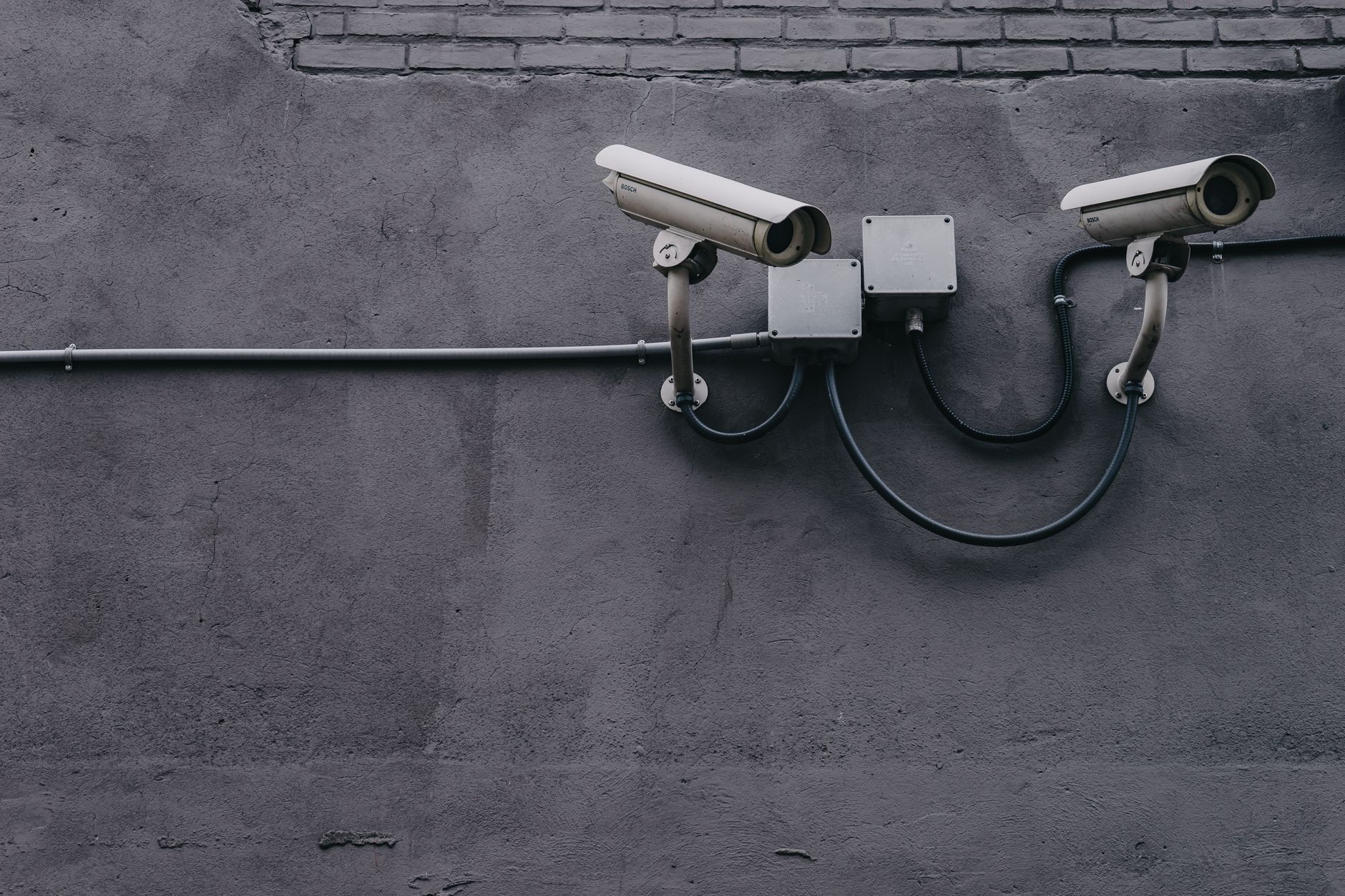
License plate reader laws are the rules that decide how long a camera can keep a photo of your car, who gets to search that photo later, and what you can do about it. If you just got a notice in the mail because a camera logged your plate, you probably have two questions.
- Why an ALPR Notice Is Different From an Ordinary Ticket
- What the First Notice Actually Means
- How License Plate Reader Laws Split the Country
- License Plate Reader Laws: All 50 States at a Glance
- The Exact Steps to Take Today
- What Happens If You Ignore It
- Warrant Rules: When Police Need More Than a Hunch
- Your Legitimate Ways Out
- The Costs Beyond the Fine
- Common Mistakes Under License Plate Reader Laws
- Protecting Yourself Going Forward
- Key Takeaways: License Plate Reader Laws
- License Plate Reader Laws: Frequently Asked Questions
Is this even legal, and what happens now? This guide answers both in plain English. It walks through the researched, state-by-state picture as it stands in 2026, and it gives you the steps that actually matter this week.
Why an ALPR Notice Is Different From an Ordinary Ticket
A normal ticket starts with a person. An ALPR notice starts with a machine. That single difference changes almost everything about how you respond.
With a regular stop, an officer saw you, wrote a citation, and signed it. There is a witness. With an automated plate reader, a fixed or mobile camera photographed your plate, ran it against a database, and flagged a match. No one may have watched you drive. In most cases the notice is generated later, sometimes days later, from stored data.
That matters because license plate reader laws control the evidence, not just the fine. Whether the photo still exists, who reviewed it, and whether the search was authorized all depend on your state. For a state-by-state breakdown of the camera systems themselves, start with our Flock camera laws by state directory, which is the parent guide for everything in this cluster.
The other difference is emotional. A ticket feels like a moment. A plate reader notice feels like being watched. That reaction is normal, and it is also the reason people make avoidable mistakes.
What the First Notice Actually Means
Your first notice is usually a claim, not a conviction. It says a system believes your plate was in a certain place at a certain time.
Read the document carefully before you do anything. Look for four things. First, is it a citation from a court, or a “notice of violation” from a city or a vendor? Second, is there a listed response deadline? Third, does it show an image, a timestamp, and a location? Fourth, does it name the agency that operated the camera?
Those four details drive your whole response. A court citation carries real consequences for ignoring it. A notice of violation from a vendor sometimes does not, at least at first. However, that can change quickly if it converts into a court matter. Under license plate reader laws in most states, the agency — not the vendor — is the entity with legal duties over the data.
How License Plate Reader Laws Split the Country
The plain truth is that the country is split roughly 21 to 29 on whether ALPR use is governed by statute at all.
Twenty-one states have passed an ALPR statute: Arkansas, California, Connecticut, Florida, Georgia, Idaho, Illinois, Maine, Maryland, Minnesota, Montana, Nebraska, New Hampshire, North Carolina, Oklahoma, Oregon, Tennessee, Utah, Vermont, Virginia, and Washington. The other 29 states rely on agency policy, general records rules, or nothing specific. For example, New Jersey has no ALPR statute, but Attorney General Directive 2022-12 governs how agencies there use the systems.
The strictest license plate reader laws are the short-retention states. New Hampshire is the outlier, requiring non-hit data to be purged in 3 minutes. Next come the 21-day states: Connecticut, Maine, Virginia, and Washington. Oregon sits at 30 days. California limits CHP-collected data to 60 days, and Minnesota also uses 60 days.
The most permissive states are the ones with no limit at all. In 28 states, no retention limit is set in law. Even among states that do set limits, some are long. Georgia allows 30 months. Vermont allows 18 months. Utah allows 9 months for government entities. Nebraska allows 180 days, and Arkansas allows 150 days for government entities. Colorado has no ALPR statute but applies a 3-year rule to passive surveillance records.
A few states have statutes with limits that are not clearly published. Idaho, Illinois, and Oklahoma all have ALPR laws, but their retention numbers are unverified in public sources. Maryland is its own category: no limit in the statute, with a Maryland Coordination and Analysis Center policy of 1 year. South Carolina currently has no statute, though S.447 is pending.
| Category | Retention Limit | Example States |
|---|---|---|
| Shortest in the nation | 3 minutes | New Hampshire |
| Very short | 21 days | Connecticut (Oct. 1, 2026), Maine, Virginia, Washington |
| Short | 30 days | Oregon |
| Moderate | 60 days | California (CHP data), Minnesota |
| Moderate | 90 days | Montana, North Carolina, Tennessee |
| Long | 150–180 days | Arkansas (150), Nebraska (180) |
| Longer | 9–18 months | Utah (9 months), Maryland (1 year, policy), Vermont (18 months) |
| Longest | 30 months – 3 years | Georgia (30 months), Colorado (3 years, passive records) |
| No limit in law | None set | Texas, New York, Ohio, Pennsylvania, Michigan (28 states total) |
Use this as a rough map, then check your own state’s page. Rules change, and license plate reader laws are one of the fastest-moving areas in traffic and privacy law right now.
License Plate Reader Laws: All 50 States at a Glance
Here is every state, whether it has an ALPR statute, and what retention limit applies. Find your state, note the number of days, and use that number to decide how fast you need to request records under the license plate reader laws where you live.
| State | ALPR Statute? | Retention Limit |
|---|---|---|
| Alabama | No | None set |
| Alaska | No | None set |
| Arizona | No | None set |
| Arkansas | Yes | 150 days (government entities) |
| California | Yes | 60 days (CHP-collected data) |
| Colorado | No | 3 years (passive surveillance records) |
| Connecticut | Yes | 21 days (effective Oct. 1, 2026) |
| Delaware | No | None set |
| Florida | Yes | Set by state retention schedule |
| Georgia | Yes | 30 months |
| Hawaii | No | None set |
| Idaho | Yes | Unverified |
| Illinois | Yes | Unverified |
| Indiana | No | None set |
| Iowa | No | None set |
| Kansas | No | None set |
| Kentucky | No | None set |
| Louisiana | No | None set |
| Maine | Yes | 21 days |
| Maryland | Yes | None in statute; MCAC policy 1 year |
| Massachusetts | No | None set |
| Michigan | No | None set |
| Minnesota | Yes | 60 days |
| Mississippi | No | None set |
| Missouri | No | None set |
| Montana | Yes | 90 days |
| Nebraska | Yes | 180 days |
| Nevada | No | None set |
| New Hampshire | Yes | 3 minutes |
| New Jersey | No | None set (AG Directive 2022-12 governs) |
| New Mexico | No | None set |
| New York | No | None set |
| North Carolina | Yes | 90 days |
| North Dakota | No | None set |
| Ohio | No | None set |
| Oklahoma | Yes | Unverified |
| Oregon | Yes | 30 days |
| Pennsylvania | No | None set |
| Rhode Island | No | None set |
| South Carolina | No | None set (S.447 pending) |
| South Dakota | No | None set |
| Tennessee | Yes | 90 days |
| Texas | No | None set |
| Utah | Yes | 9 months (government entities) |
| Vermont | Yes | 18 months |
| Virginia | Yes | 21 days |
| Washington | Yes | 21 days |
| West Virginia | No | None set |
| Wisconsin | No | None set |
| Wyoming | No | None set |
The Exact Steps to Take Today
Do these five things in order, and do the first one today.
1. Write down your deadline. Find the response date on the notice. Put it in your phone with a reminder five days early. Most serious problems in these cases start with a missed date, not a bad defense.
2. Send a preservation and records request. Email the agency named on the notice. Ask them to preserve all ALPR images, timestamps, GPS coordinates, hit-list entries, and audit logs tied to your plate. Reference your state’s public records act. In short-retention states this step is urgent.
3. Verify the plate and the vehicle. Zoom in on the image. Compare every character. Misreads between 8 and B, 0 and O, and 5 and S are common. Also confirm the make, model, and color match your car.
4. Check whether you still owned the vehicle. Sold cars, transferred plates, and rentals produce a real share of wrong notices. Gather the bill of sale or rental agreement now.
5. Decide your path. Pay, dispute, or appear. Do not leave it undecided. Understanding license plate reader laws in your state helps here, because a state with a short retention window may not be able to produce the evidence against you.
What Happens If You Ignore It
Ignoring an ALPR notice almost never makes it disappear. It usually makes it more expensive.
The typical escalation path runs in stages. First, a late fee is added. Then the matter may be referred to the court, where it becomes a formal citation. Next comes a failure-to-appear or failure-to-pay finding. In many states that triggers a registration hold or a license suspension. Finally, the balance can go to collections, which can affect your credit.
Each stage is harder and costlier to unwind than the one before. For a full walkthrough of what happens once one of these notices converts into an enforceable citation in your state, read our guide to the Flock camera ticket by state rules. That is the next stage of this exact problem.
One more point worth understanding. License plate reader laws generally govern data handling, not collection of the fine. So a state can have strong privacy protections and still enforce the underlying violation aggressively. The two systems run on separate tracks.
Warrant Rules: When Police Need More Than a Hunch
The short answer is that a plain plate photo usually does not require a warrant, but long-term tracking increasingly does.
Courts have long held that a license plate on a public road carries little privacy expectation. Anyone can see it. However, that reasoning gets shakier when thousands of scans are combined to map where a car goes over weeks or months. That aggregation is where litigation is now focused, and it is where several states have tightened their license plate reader laws.
The practical rules break into three buckets. Real-time scanning against a hot list is generally allowed. Querying stored historical data is more restricted, often requiring a documented law-enforcement purpose and an audit trail. Sustained tracking of a specific vehicle over time is the area most likely to require judicial authorization, depending on your state.
Several statutes also limit who may access the data and forbid sharing it for immigration, abortion, or commercial purposes. Vermont, Virginia, Washington, and California each impose access and audit conditions. If you want to understand the legal terms in your notice, our traffic law glossary defines the ones that come up most often.
For the underlying constitutional background, Cornell’s Legal Information Institute keeps a readable overview of Fourth Amendment search doctrine at law.cornell.edu/wex. It is a good starting point before you read your own state’s statute.
Your Legitimate Ways Out
Most people have more options than they think. Here are the ones that actually work.
Identity and plate errors. If the plate was misread, or the car was not yours on that date, say so in writing with documentation. This is the cleanest and most common win.
📨 Get Free Traffic Ticket Guides Alerts
Free · No spam · Unsubscribe anytime
Evidence gaps. In short-retention states, the raw data may already be deleted. If the agency cannot produce the image and the audit log, many drivers can ask the court to weigh that. You may be able to get a reduction or dismissal, but check with your court on how it handles missing records.
Chain-of-custody and calibration. Ask who maintained the camera, when it was last verified, and whether a human reviewed the hit before the notice issued. Some license plate reader laws require human review.
Mitigation. Many courts allow a reduced charge, a fine-only disposition with no points, or traffic school. Ask directly.
Payment plans and hardship relief. Most courts offer installment plans, and many offer reduced fines for low-income drivers. You have to ask; it is rarely offered.
The Costs Beyond the Fine
The fine is usually the smallest number in the whole situation.
If a camera notice converts into a moving violation on your record, three other costs follow. Insurance is the biggest. A single moving violation commonly raises premiums for three years. Points are the second. Enough points triggers a suspension, and the threshold varies a lot by state.
The third cost is employment. Drivers with a CDL, delivery drivers, rideshare drivers, and anyone with a company vehicle can face job consequences from a single conviction. That is why fighting a $100 notice can be worth several hours of your time.
To see how the numbers stack up where you live, compare our speeding ticket costs by state data with the driving points by state tables. If you already have points, run your total through the points and suspension checker tool before you decide whether to just pay.
Common Mistakes Under License Plate Reader Laws
Most people lose these cases on procedure, not on the merits. Here is what goes wrong.
Waiting to request records. This is the single biggest one. In a 21-day state, waiting a month means the evidence is legally gone — and so is your best argument. Understanding your state’s retention window under its license plate reader laws is the whole game.
Assuming it is a scam and trashing it. Some ALPR notices are fake. Many are real. Verify with the agency directly before ignoring anything.
Paying immediately to make it go away. Payment is usually an admission. If the violation carries points, that admission follows you for years.
Arguing that cameras are unconstitutional. Courts have mostly rejected this for single plate scans. It burns credibility you need for the factual argument.
Missing the appearance date. Never assume a mailed dispute stops the clock. Confirm it in writing.
Not checking whether your state even has a statute. In 29 states there is none, which changes what you can demand.
Protecting Yourself Going Forward
You cannot opt out of plate readers, but you can reduce your exposure and stay informed.
Start with registration hygiene. File your release of liability the day you sell a car. Keep your address current with the DMV so notices actually reach you. A surprising number of suspensions come from mail sent to an old address.
Next, know your state’s posture. If you live in one of the 28 states with no retention limit set, assume scans of your car may persist for years. If you live in New Hampshire, Maine, Virginia, Washington, or Connecticut, the window is much shorter. That difference should shape how quickly you act on any notice.
Finally, stay current. License plate reader laws are being rewritten every session. Connecticut’s 21-day rule takes effect October 1, 2026, and South Carolina’s S.447 is still pending. You can follow the full set of guides in our Flock and ALPR laws category, and find your local rules through the all states directory.
None of this requires a lawyer for a simple notice. It does require you to read the document, calendar the deadline, and send one records request. That is the difference between a $100 problem and a suspended registration.
Key Takeaways: License Plate Reader Laws
- The first notice is the cheapest stage: everything about license plate reader laws gets more expensive with each deadline that passes.
- Your state decides, not a national rule: the license plate reader laws table above shows how far the same problem varies from one border to the next.
- Contact changes the track: a driver who calls the court or agency about license plate reader laws exits the automatic escalation and enters the negotiated one.
License Plate Reader Laws: Frequently Asked Questions
Are license plate readers legal in my state?
Almost certainly yes. No state bans them outright. The real question is whether your state regulates them, and 21 states do by statute while 29 do not. Check your state’s row in the table above.
How long can police keep a photo of my license plate?
It depends entirely on where you live. New Hampshire requires purging in 3 minutes, while Georgia allows 30 months and Colorado applies a 3-year rule to passive surveillance records. In 28 states, no limit is set in law at all.
Do police need a warrant to search ALPR data?
Usually not for a single real-time scan, because a plate on a public road has little privacy protection. However, searching months of stored location history is treated more seriously, and some license plate reader laws require documented purpose, audit logs, or judicial approval. The rules vary by state.
Can I request the data a camera collected on my car?
Often yes, through your state’s public records act, though some statutes restrict access to ALPR databases. Send the request in writing to the agency, not the camera vendor. Do it fast, because retention windows are short in several states.
Is an ALPR notice the same as a ticket?
Not always. Some are formal citations filed with a court, and some are administrative notices of violation. The document should say which. Either way, ignoring it can escalate into a court citation with added fees.
Will an ALPR violation put points on my license?
It depends on the underlying offense and your state. Many automated camera violations are non-moving and carry no points, but some do. Check your state’s point schedule before paying, since paying is generally treated as an admission.
Can I fight it if the state deleted the evidence?
You may be able to. If the agency cannot produce the image or audit log, many drivers ask the court to consider that gap. Outcomes vary widely, so ask your court clerk how missing records are handled locally.
A ticket can raise your insurance for years
See how much a violation affects rates in your state — and compare cheaper options.
Find Your State’s Exact Rules
The table above is the short version. Every state has a full guide with the statute, the deadlines, the fee schedule, and the exact steps — and the license plate reader laws picture changes once you read your own state’s page.
Sources & How to Verify
The rules on this page are drawn from state statutes, agency fee schedules, and each state’s verified guide on this site. Figures move by legislation, so always confirm the current rule with your state guide or the office named on your notice.
- Cornell Legal Information Institute: www.law.cornell.edu/wex – plain-English definitions of the legal terms on this page
- GHSA: www.ghsa.org – state-by-state summaries of automated enforcement and traffic laws
- National Center for State Courts: www.ncsc.org – how state courts handle fines, fees, and failure to appear
- Table rows: each state’s value was checked against its own statute, agency, or court page (most cited: www.ncsl.org, law.justia.com, leginfo.legislature.ca.gov, codes.findlaw.com, www.wfsb.com, www.flsenate.gov) — open your state’s guide for the direct citation
Content last reviewed September 2026. If you notice outdated information, please contact us.
Related Guides
- Flock Camera Laws by State
- Flock Camera Ticket by State
- All Guides in This Cluster
- All 50 State Guides
- Traffic Law Glossary
Informational only — not legal advice. Speeding Ticket Guide is an independent educational resource, not a law firm, and this page does not provide legal advice. Fines, fees, deadlines, and procedures vary by state and sometimes by court, and they change by legislation. For advice about your specific situation, consult a licensed traffic attorney in your state.