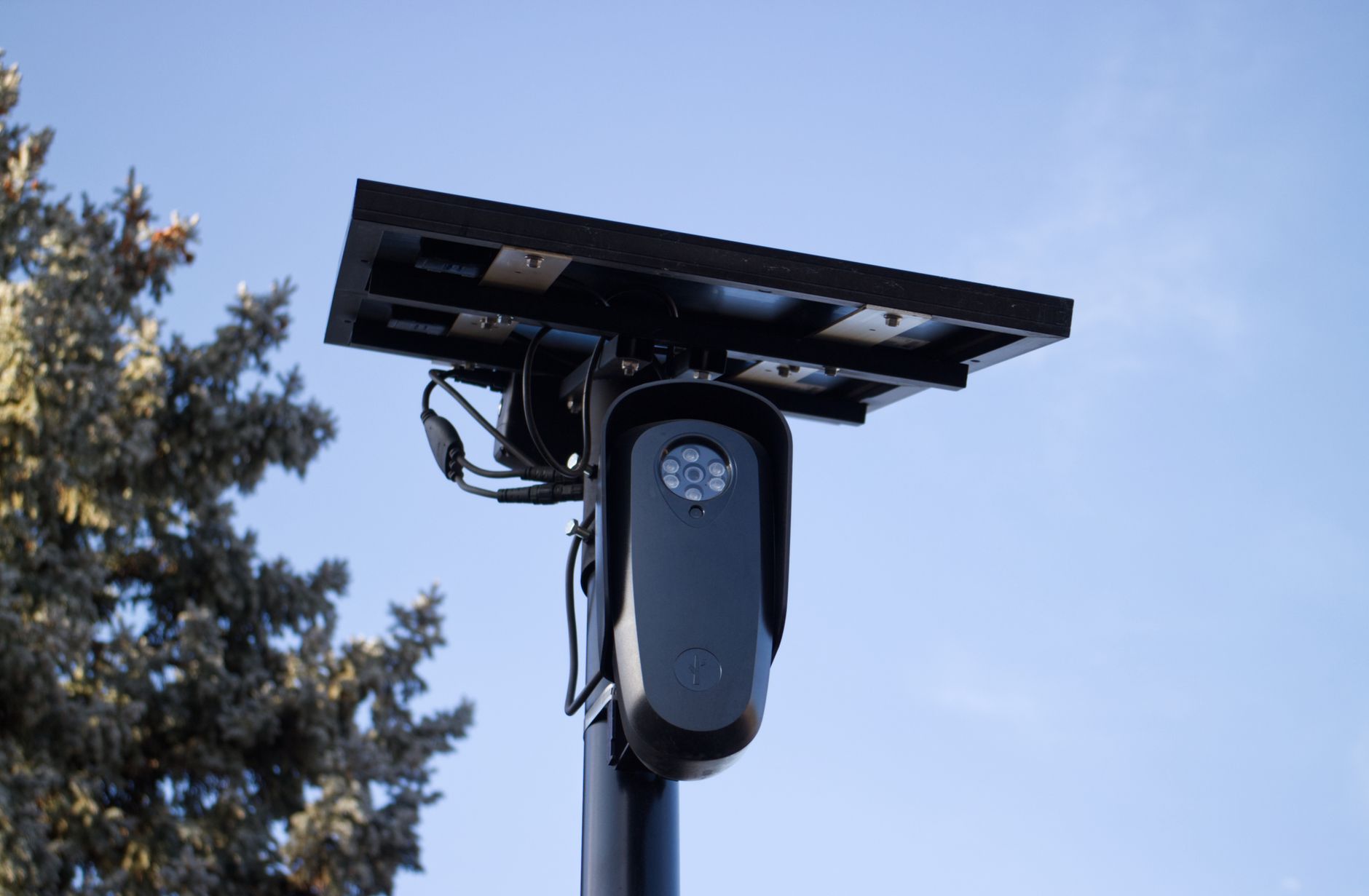
Fight a flock camera ticket and the first thing you learn is that the rules are not the same everywhere. A notice shows up in the mail weeks after the drive. There is no officer, no signature, no conversation on the shoulder of the road. Just a photo of your plate and a number to pay.
- Why a Flock Camera Ticket Is Not an Ordinary Ticket
- What the First Notice in Your Mailbox Actually Means
- The State Pattern: Who Is Harsh and Who Is Lenient
- Fight a Flock Camera Ticket: All 50 States at a Glance
- Notice Defects: The First Way to Fight a Flock Camera Ticket
- Owner Versus Driver: Who Is Actually on the Hook
- Retention Arguments: What the System Kept and for How Long
- The Exact Steps to Take Today to Fight a Flock Camera Ticket
- How It Escalates If You Ignore the Notice
- The Legitimate Ways Out
- The Costs Beyond the Fine
- The Most Common Mistakes When People Fight a Flock Camera Ticket
- Protecting Yourself Going Forward
- Key Takeaways: Fight a Flock Camera Ticket
- Fight a Flock Camera Ticket: Frequently Asked Questions
Many drivers assume that means the case is airtight. In most cases, it is not. Whether you can fight a flock camera ticket at all depends on your state, the wording on the notice, and who was actually behind the wheel.
Why a Flock Camera Ticket Is Not an Ordinary Ticket
The difference is simple: nobody stopped you. An ordinary speeding ticket starts with a sworn officer who saw the driver. A camera notice starts with a machine that saw a license plate. That gap matters more than most people realize. A plate identifies a car, not a person. As a result, many states treat these notices as civil matters against the registered owner instead of criminal or traffic charges against a driver.
That civil framing cuts both ways. Maryland, for example, treats camera violations as civil with no license points. New York caps the penalty at $50. However, civil also means fewer built-in protections. There is no roadside conversation, no officer memory to test, and sometimes no automatic court date. You have to ask for the hearing yourself. If you want to fight a flock camera ticket, you almost always have to take the first step.
It also helps to know what the underlying technology is allowed to do in your state before you argue about the ticket. Our flock camera laws by state guide covers that earlier stage: what the cameras may record, who may access it, and what limits apply. Read that first if the legality of the camera itself is your main concern.
What the First Notice in Your Mailbox Actually Means
The first mailing is usually a notice of violation, not a court summons. That distinction is the single most misread thing in this whole process. A notice of violation is an invitation to pay or contest. It typically lists the plate, the location, the date and time, a claimed speed, an image, and a due date. Arizona, for example, issues a notice of violation with a $165 penalty. Delaware issues a civil offense at $112.50.
Read every line before you decide anything. Look for the issuing agency, the statute cited, the mailing date, and the deadline. Then compare the mailing date to your state’s legal window. Several states put a hard clock on how fast the notice must go out. Miss that window and the notice may be defective on its face.
The State Pattern: Who Is Harsh and Who Is Lenient
Twenty-seven states allow a camera to generate a ticket, and the rest do not. Here is the honest breakdown. Alabama, Arizona, California, Colorado, Connecticut, Delaware, Florida, Georgia, Hawaii, Illinois, Indiana, Iowa, Kentucky, Louisiana, Maryland, Michigan, Minnesota, New Mexico, New York, North Carolina, Ohio, Oregon, Pennsylvania, Rhode Island, Tennessee, Virginia, and Washington all permit it in some form. Those are the harshest 27 for drivers.
Eleven states say no outright. Alaska, Idaho, Maine, Mississippi, Montana, New Hampshire, Oklahoma, South Dakota, Texas, West Virginia, and Wisconsin all block it. Some do it by named statute. Montana bars automated enforcement under MCA 61-8-206. New Hampshire prohibits highway surveillance under RSA 236:130. Texas forbids a citation from a recorded image under section 707.021. West Virginia bars photo-monitoring evidence under 17C-6-7a. Those citations are useful, because they let you fight a flock camera ticket with a statute number instead of an opinion.
Seven more states simply have no authority on the books: Kansas, Massachusetts, Missouri, Nebraska, New Jersey, Vermont, and Wyoming. New Jersey’s pilot expired in December 2014 and was never renewed. Missouri requires that the driver be identified, not just the plate. Vermont requires an officer to issue the citation. Four states allow it only alongside an officer stop: Arkansas, Nevada, North Dakota, and South Carolina. Utah’s status is unverified, so confirm it locally.
Even inside the permissive 27, the officer-presence rule varies. Five of those states still require officer involvement. Georgia requires a sworn officer to certify recorded images. Louisiana requires a POST-certified officer to operate the device. Michigan requires an officer to witness the violation except in work zones. Ohio requires an officer present at the device. Washington requires an officer to certify the images, though not to witness the event. The other 22 require nothing of the sort.
Fight a Flock Camera Ticket: All 50 States at a Glance
Use this table to find your state’s answer fast. It shows whether a camera can ticket you there and what the officer-presence rule is. Then open your own state’s page from the flock camera ticket by state directory for the local detail.
| State | Can a Flock Camera Ticket You? | Officer-Presence Rule |
|---|---|---|
| Alabama | Yes | Not required; civil citation mailed to owner |
| Alaska | No | Statute silent; no camera authority |
| Arizona | Yes | Not required; notice of violation, $165 |
| Arkansas | Only with officer stop | Officer must be present and cite at scene |
| California | Yes | Not required; owner liable, 11+ mph over |
| Colorado | Yes | Not required; notice mailed within 30 days |
| Connecticut | Yes | Not required; mailed within 14 days |
| Delaware | Yes | Not required; civil offense, $112.50 |
| Florida | Yes | Not required; notice mailed to owner |
| Georgia | Yes | Sworn officer must certify recorded images |
| Hawaii | Yes | Not required; Honolulu pilot intersections only |
| Idaho | No | ALPR barred from routine traffic enforcement |
| Illinois | Yes | Not required; mailed within 90 days |
| Indiana | Yes | Not required; work zones only, 11+ mph over |
| Iowa | Yes | Not required; DOT permit required per site |
| Kansas | Not currently | Statute silent |
| Kentucky | Yes | Not required; work zones with workers present |
| Louisiana | Yes | POST-certified officer must operate device |
| Maine | No | Camera may not prove or enforce violation |
| Maryland | Yes | Not required; civil, no license points |
| Massachusetts | Not currently | Statute silent |
| Michigan | Yes | Officer must witness except in work zones |
| Minnesota | Yes | Not required; pilot barred from police control |
| Mississippi | No | Automated recording equipment prohibited |
| Missouri | Not currently | Driver must be identified, not just plate |
| Montana | No | Automated enforcement barred (MCA 61-8-206) |
| Nebraska | Not currently | Statute silent; no camera authority |
| Nevada | Only with officer stop | Camera must be worn/held by peace officer |
| New Hampshire | No | Highway surveillance prohibited (RSA 236:130) |
| New Jersey | Not currently | Statute silent; pilot expired Dec 2014 |
| New Mexico | Yes | State Police review images; no stop needed |
| New York | Yes | Not required; owner liability, $50 max |
| North Carolina | Yes | Not required; $250 civil penalty, school zones |
| North Dakota | Only with officer stop | Officer must stop driver (NDCC 39-07-07) |
| Ohio | Yes | Officer must be present at the device |
| Oklahoma | No | Officer must witness; red-light cams banned |
| Oregon | Yes | Not required if signage conditions met |
| Pennsylvania | Yes | Not required; active work zones, Roosevelt Blvd |
| Rhode Island | Yes | Not required; school zones, 7am-6pm |
| South Carolina | Only with officer stop | Must serve in person within 1 hour |
| South Dakota | No | Photo monitoring device contracts banned |
| Tennessee | Yes | Not required; nonmoving violation, 20 days |
| Texas | No | No citation from recorded image (707.021) |
| Utah | Unverified | Unverified |
| Vermont | Not currently | Officer must issue the citation |
| Virginia | Yes | Not required; 10+ mph over, $100 max |
| Washington | Yes | Officer certifies images; need not witness |
| West Virginia | No | Photo-monitoring evidence barred (17C-6-7a) |
| Wisconsin | No | Photo radar speed detection prohibited |
| Wyoming | Not currently | Statute silent; no camera authority |
Notice Defects: The First Way to Fight a Flock Camera Ticket
A defective notice is the easiest thing to challenge because it is on paper in front of you. You do not need an expert. You need a careful eye. Notice defects fall into a few buckets: late mailing, wrong address, wrong plate, missing statute citation, missing certification, missing signage, or an image that does not clearly show the plate.
Signage matters more than people expect. Oregon, for example, does not require officer presence only if signage conditions are met. Rhode Island limits school-zone enforcement to 7am–6pm. Kentucky limits enforcement to work zones with workers actually present. Indiana limits it to work zones at 11 or more mph over. Pennsylvania limits it to active work zones and Roosevelt Boulevard. If the conditions were not met, the notice may not hold up.
| State | Exact Penalty | Points | Key Condition |
|---|---|---|---|
| New York | $50 maximum | 0 (owner liability) | Civil, owner liable |
| Virginia | $100 maximum | 0 | 10+ mph over required |
| Delaware | $112.50 | 0 | Civil offense |
| Arizona | $165.00 | 0 on notice of violation | Notice of violation mailed |
| North Carolina | $250.00 | 0 (civil penalty) | School zones only |
Notice how none of these five carry license points. That is typical of civil camera programs, but it is not universal. Confirm the point consequence for your own state using our driving points by state guide before you assume your record is safe.
Owner Versus Driver: Who Is Actually on the Hook
In most camera states, the registered owner is presumed responsible, not the person who was driving. California, for example, holds the owner liable at 11 or more mph over. New York uses straight owner liability. Alabama mails a civil citation to the owner. Florida mails the notice to the owner. That presumption is rebuttable in many places, which is exactly where the owner-versus-driver argument lives.
If someone else was driving, say so in writing and on time. Common situations include a spouse, an adult child, a coworker, a valet, a mechanic, or a renter. Some jurisdictions accept a sworn affidavit naming the driver. Others accept proof the car was sold, stolen, or in the shop that day. Keep the proof simple and dated: a bill of sale, a repair invoice, a police report, a rental agreement.
Missouri is the clearest example of the identity problem. There, the driver must be identified, not just the plate. That single requirement is why Missouri camera programs have struggled. If your state has similar language, it is a strong place to fight a flock camera ticket. Plate-only proof simply may not be enough.
Plate misreads happen too. Characters get confused. Stacked plates, dealer tags, and dirty plates cause errors. Compare the plate in the image to your registration character by character. If they do not match, that is a factual defense, not a technicality. Many drivers can get a notice voided on plate mismatch alone, though you still have to raise it with the court.
Retention Arguments: What the System Kept and for How Long
Retention is about the data behind the photo. Automated camera systems store plate reads, timestamps, GPS coordinates, calibration logs, and sometimes video. Those records are evidence. However, many systems purge data on a short schedule. If the supporting records are gone by your hearing date, the agency may not be able to prove the elements of the case.
This is why acting fast matters so much. Request the underlying records in writing as soon as you get the notice. Ask for the calibration or certification record for the device, the officer certification where required, the full image set, the timestamp log, and the retention policy. Georgia and Washington both require an officer to certify images, so ask specifically for that certification.
Retention also connects to the deployment question. Minnesota’s pilot program is barred from police control. Iowa requires a DOT permit for each site. Hawaii limits it to Honolulu pilot intersections. Idaho bars ALPR from routine traffic enforcement entirely. If the device was operating outside its authorized program, the records will usually show it. That is a documented, checkable way to fight a flock camera ticket rather than a guess.
If terms like “rebuttable presumption,” “civil penalty,” and “certification” are new to you, our traffic law glossary defines them in plain English. Knowing the vocabulary makes your written request sound like it belongs in the file.
The Exact Steps to Take Today to Fight a Flock Camera Ticket
Do these in order, and do them this week. Speed is your main advantage, because every deadline here runs against you.
| Step | What to Do | When |
|---|---|---|
| 1 | Photograph the notice and the envelope, including the postmark | Day you receive it |
| 2 | Check whether your state allows camera tickets at all | Same day |
| 3 | Compare mail date to your state’s window (14, 20, 30 or 90 days) | Same day |
| 4 | Verify the plate, make, model, date, time and location | Within 2 days |
| 5 | Identify who was driving and gather dated proof | Within 3 days |
| 6 | Request records: calibration, certification, images, retention policy | Within 5 days |
| 7 | File your written contest or hearing request | Before the printed deadline |
Write everything down and keep copies. Send your contest by a method that creates a receipt. Certified mail or a portal confirmation both work. If you call the court, note the date, time, and the name of the person you spoke with. Courts run on documentation. So does any real attempt to fight a flock camera ticket.
One more thing. Do not pay the notice while you are still deciding. In nearly every jurisdiction, payment is an admission and it closes the case. You cannot fight a flock camera ticket you have already paid.
How It Escalates If You Ignore the Notice
Ignoring it almost never makes it go away. The typical path is notice, late fee, second notice, then referral to collections or a registration hold. Some jurisdictions add a court appearance requirement once the civil penalty goes unpaid. Others block your registration renewal until the balance clears. A $112.50 civil offense can quietly double.
📨 Get Free Traffic Ticket Guides Alerts
Free · No spam · Unsubscribe anytime
The escalation pattern is very similar to what happens with red-light camera notices, and the two systems often share the same court and the same collections vendor. If you want to see the next stage of this problem in detail, including how holds and late fees stack, read our red light camera ticket by state guide. Understanding that stage early is often what convinces people to fight a flock camera ticket instead of hoping it disappears.
There is one more risk. In some states, an unpaid civil penalty gets converted into a moving violation once a court is involved. That is when points can appear on a record that started out point-free. Check your exposure with the points and suspension checker tool before you let anything go to collections.
The Legitimate Ways Out
There are usually four honest paths, and only one of them is a fight. First, contest it on the merits. Second, transfer liability by naming the actual driver. Third, ask for a payment plan or a hardship reduction. Fourth, request a mitigation hearing where you admit the violation but ask for a lower penalty or more time.
Contesting on the merits is where notice defects, plate errors, signage failures, and retention gaps all live. In states with an officer-presence rule, ask directly whether the requirement was met. Ohio requires an officer present at the device. Louisiana requires a POST-certified operator. Michigan requires an officer to witness outside work zones. If the answer is no, say so clearly and in writing.
Mitigation is underrated. Many courts will reduce a civil penalty, waive late fees, or grant 60 to 90 extra days for a first-time notice. You typically have to ask, and you have to ask before the due date. Many drivers can cut their total cost this way even when they cannot beat the notice outright. Ask your clerk what forms your court uses.
If you are weighing whether contesting is worth the time, compare the numbers. Our speeding ticket costs by state guide shows what a comparable non-camera ticket runs in your state. Sometimes a $50 New York camera notice is not worth a day off work. A $250 North Carolina penalty usually is worth the effort to fight a flock camera ticket properly.
The Costs Beyond the Fine
The sticker price is rarely the whole cost. Think about four categories: insurance, driving record, job requirements, and time. Civil camera penalties with no points, like Maryland’s, usually stay off your insurance. However, once a notice converts into a moving violation, that protection can vanish.
| Cost Category | Typical Camera Notice | If It Converts to a Moving Violation |
|---|---|---|
| Base penalty | $50–$250 depending on state | Base fine plus court costs |
| License points | 0 in most civil programs | Varies by state schedule |
| Late fee | Often added after the due date | Added, plus collection fees |
| Registration hold | Possible after nonpayment | Common |
| Insurance impact | Usually none | Possible surcharge at renewal |
Commercial drivers should be especially careful. A CDL record treats convictions differently than a civil penalty, and employers often run records quarterly. If driving is part of your job, the record consequence may matter more than the dollars. That alone is a reason to fight a flock camera ticket rather than pay it quietly.
The Most Common Mistakes When People Fight a Flock Camera Ticket
The mistakes are predictable, and they are all avoidable. Here are the ones that cost drivers the most.
Paying first and asking questions later. Payment closes the case in nearly every jurisdiction. Missing the contest deadline because the notice looked like junk mail. Assuming the camera is illegal everywhere because a friend in Texas beat one. Texas bars citations from recorded images, but Florida does not. Arguing that cameras are unfair rather than that this notice is defective. Courts respond to facts and statutes, not to policy opinions.
Two more come up constantly. Showing up without documents, and naming the wrong driver. If you transfer liability, name the correct person and be accurate, because a false statement can create a much bigger problem than the fine. And do not skip checking your own state’s rule. The whole cluster of guides is collected at our flock camera tickets category page, and every state page on the site is indexed under all states.
Protecting Yourself Going Forward
The best defense is boring paperwork done early. Keep your vehicle registration address current, because a notice mailed to an old address still starts the clock. Keep a simple log of who borrows your car. Photograph your plate once a year so you have a clean reference image. Save repair invoices and rental agreements for at least a year.
If you sell a vehicle, file the release of liability immediately. That single form prevents most wrongful owner-liability notices. If your plate is stolen, report it the same day and keep the report number. These small habits are what let people fight a flock camera ticket in an afternoon instead of over three months.
Finally, know your local rules before you need them. New Mexico has State Police review images with no stop needed. Tennessee treats it as a nonmoving violation with a 20-day window. Nevada requires the camera to be worn or held by a peace officer. North Dakota requires an officer to stop the driver under NDCC 39-07-07. Ten minutes of reading now saves a lot of stress later.
Key Takeaways: Fight a Flock Camera Ticket
- The first notice is the cheapest stage: everything about fight a flock camera ticket gets more expensive with each deadline that passes.
- Your state decides, not a national rule: the fight a flock camera ticket table above shows how far the same problem varies from one border to the next.
- Contact changes the track: a driver who calls the court or agency about fight a flock camera ticket exits the automatic escalation and enters the negotiated one.
- Keep every envelope: the postmark and notice dates are the evidence in most fight a flock camera ticket disputes.
- Check your license status now: a hold tied to fight a flock camera ticket can attach before any letter reaches you.
Fight a Flock Camera Ticket: Frequently Asked Questions
Can a Flock camera legally ticket me in my state?
It depends entirely on where the violation happened. Twenty-seven states allow camera-generated tickets, 11 ban them outright, seven have no authorizing statute, and four allow them only with an officer stop. Utah’s status is unverified. Check the state table above, then confirm with your local court.
What is the very first thing I should do?
Photograph the notice and the envelope, including the postmark. Then compare the mailing date to your state’s legal window. Connecticut allows 14 days, Tennessee 20, Colorado 30, and Illinois 90. A late notice may be defective, and that is often the simplest way to fight a flock camera ticket.
What if I was not the one driving?
Most camera states presume the registered owner is responsible, but that presumption can often be rebutted. Ask your court what form it uses to name the actual driver. Bring dated proof such as a rental agreement, repair invoice, bill of sale, or police report. Accuracy matters, so never name someone who was not driving.
Will a camera notice put points on my license?
Usually not. Maryland is explicitly civil with no license points, and New York caps the penalty at $50 under owner liability. However, an unpaid notice can escalate into a court matter where points become possible. Verify your state’s rule with the driving points by state guide before assuming you are clear.
Does paying the notice end the matter?
Paying usually ends the case, but it also counts as an admission in most jurisdictions. Once you pay, you generally cannot reopen it or contest it. If you think you have a real defense, request the hearing first. You cannot fight a flock camera ticket after you have paid it.
What are retention arguments and do they actually work?
Retention arguments focus on the records behind the photo: calibration logs, officer certifications, timestamps, and the full image set. Many systems purge this data on a short schedule. If those records are missing at your hearing, the agency may not be able to prove its case. Request them in writing early.
Is it worth contesting a small penalty?
That is a personal call. A $50 New York notice may not justify a day off work, while a $250 North Carolina penalty often does. Also weigh the record consequences, especially if you hold a CDL. Many drivers can at least get late fees waived or a payment plan by asking their clerk.
A ticket can raise your insurance for years
See how much a violation affects rates in your state — and compare cheaper options.
Find Your State’s Exact Rules
The table above is the short version. Every state has a full guide with the statute, the deadlines, the fee schedule, and the exact steps — and the fight a flock camera ticket picture changes once you read your own state’s page.
Sources & How to Verify
The rules on this page are drawn from state statutes, agency fee schedules, and each state’s verified guide on this site. Figures move by legislation, so always confirm the current rule with your state guide or the office named on your notice.
- GHSA: www.ghsa.org – state-by-state summaries of automated enforcement and traffic laws
- IIHS: www.iihs.org – automated enforcement research and state camera-law tracking
- Cornell Legal Information Institute: www.law.cornell.edu/wex – plain-English definitions of the legal terms on this page
- NHTSA: www.nhtsa.gov – federal traffic safety data and state program summaries
- Table rows: each state’s value was checked against its own statute, agency, or court page (most cited: law.justia.com, www.waff.com, www.adn.com, www.azag.gov, leginfo.legislature.ca.gov, portal.ct.gov) — open your state’s guide for the direct citation
Content last reviewed September 2026. If you notice outdated information, please contact us.
Related Guides
- Flock Camera Ticket by State
- Red Light Camera Ticket by State
- Flock Camera Laws by State
- All Guides in This Cluster
- All 50 State Guides
- Traffic Law Glossary
Informational only — not legal advice. Speeding Ticket Guide is an independent educational resource, not a law firm, and this page does not provide legal advice. Fines, fees, deadlines, and procedures vary by state and sometimes by court, and they change by legislation. For advice about your specific situation, consult a licensed traffic attorney in your state.